This article contains affiliate links: if you buy through them we may earn a commission, at no extra cost to you. Learn more.
The car door opens at the lake, and out comes a bag the size of a sleeping bag. Ten minutes of pumping later there’s an 11-foot board on the sand, a paddle clicked together, a life jacket on, sunscreen on, phone in a dry bag, and you’re floating. That’s the magic of modern paddleboarding gear: very little stands between you and the water. But a few choices matter a lot for safety and comfort: inflatable or hard, the right paddle length, the right leash for the water, and a life jacket you’ll actually wear. This page walks through them, plus the recovery gear for afterward.
Buying guide · Our Paddleboarding buying guide compares the gear we'd pick, with prices and sizing:
Prices change often. The prices below are what we saw at the maker or a major retailer in October 2026; check the current price before you buy.
Our top picks
iRocker All Around 11 8.0 Inflatable SUP
- 11 ft x 32 in x 6 in, rated to 400 lb
- Rated to 15 PSI
- Carbon paddle, pump, leash included
Aqua-Bound Freedom 85 4-Piece SUP Paddle
- 100% carbon shaft
- 85 sq in blade
- Adjustable, 4-piece
FunWater SUP Quick Release Belt
- Quick-release waist belt
- Pull cord in front
- Coiled leash included
Onyx MoveVent Dynamic Paddle Vest
- USCG and Transport Canada approved
- Adults 90 lb and over
- Mesh back, reflective trim
Onyx M-16 Belt Pack Inflatable PFD
- USCG approved, manual inflation
- Ages 16+ and over 80 lb
- Must be worn to count
BUFF Original EcoStretch Neck Gaiter
- UPF 50 (maker)
- Neck, ears and face
- Quick-dry
Earth Pak 5L Waterproof Dry Bag
- 500D PVC roll top
- Waterproof phone case included
- 5-year warranty (maker)
Theragun Mini (3rd gen)
- Pocket-size massage gun
- 3 speeds
- 3 attachments
Inflatable vs hard paddleboards
| Inflatable (iSUP) | Hard (epoxy, composite) | |
|---|---|---|
| Transport and storage | Rolls into a backpack-size bag; fits a closet, a small car, a plane | Needs a roof rack or truck and wall or garage space |
| Durability | Well-built ones shrug off rocks and docks, Starboard says | More prone to dings and cracks from knocks |
| Performance | Good for cruising, yoga, family paddling | Faster and more responsive: racing, surfing, touring |
| Falls | Softer to land on | Harder deck and rails |
| Best for | Most beginners, travelers, apartment dwellers | Racers, surfers, anyone with storage who wants glide |
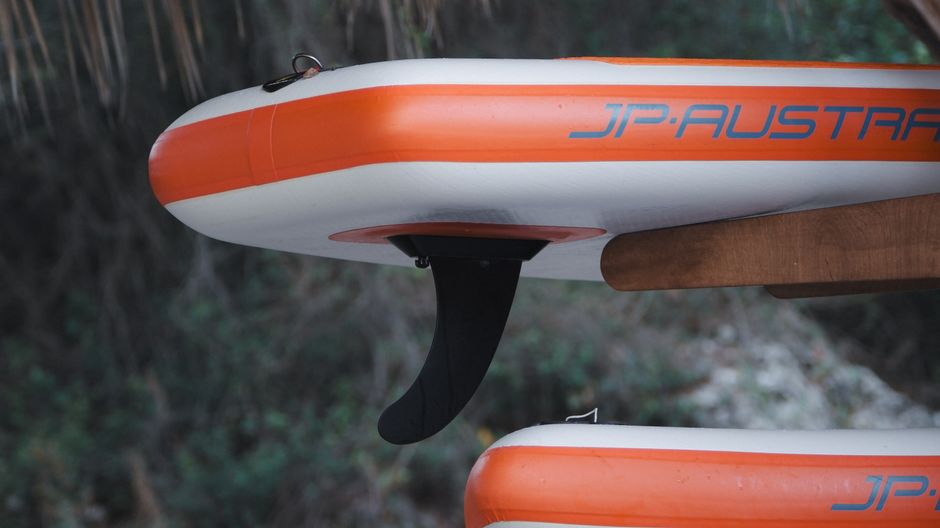
For most people the first board is an all-around inflatable. The iRocker All Around 11 8.0 (about $580 on Amazon) is 11 ft long, 32 in wide and 6 in thick, rated to 15 PSI and to 400 lb, and the maker aims it at skilled beginners and intermediate paddlers on flatwater, chop and small surf. It comes with a 3-piece carbon paddle, a dual-chamber hand pump, three fins, a coiled leash and a repair kit. Pump inflatables to the pressure printed on the board; a soft board flexes and feels tippy.
Board types by what you’ll do
- All-around: wide and stable, with a rounded nose. Flatwater, light chop, kids on the front. Start here.
- Touring: longer and narrower with a pointed nose for glide and tracking on longer paddles.
- Race: long, narrow and fast, and tippy. The ICF world championships race hard boards up to 14 ft, with a separate inflatable class.
- Yoga and fitness: extra wide with a full-length pad and often anchor points.
- Surf: shorter and more maneuverable; see our surfing gear page for the surf side.
Whatever the type, check the weight capacity against you plus a child, a dog or gear, and leave a good margin.
Paddles and paddle sizing
Paddle maker Aqua-Bound’s sizing guide adds inches to your height by discipline:
| Use | Paddle length |
|---|---|
| Recreational and flatwater | Your height + 8 to 10 in |
| SUP surfing | Your height + 6 to 8 in |
| Racing | Your height + 4 to 6 in |
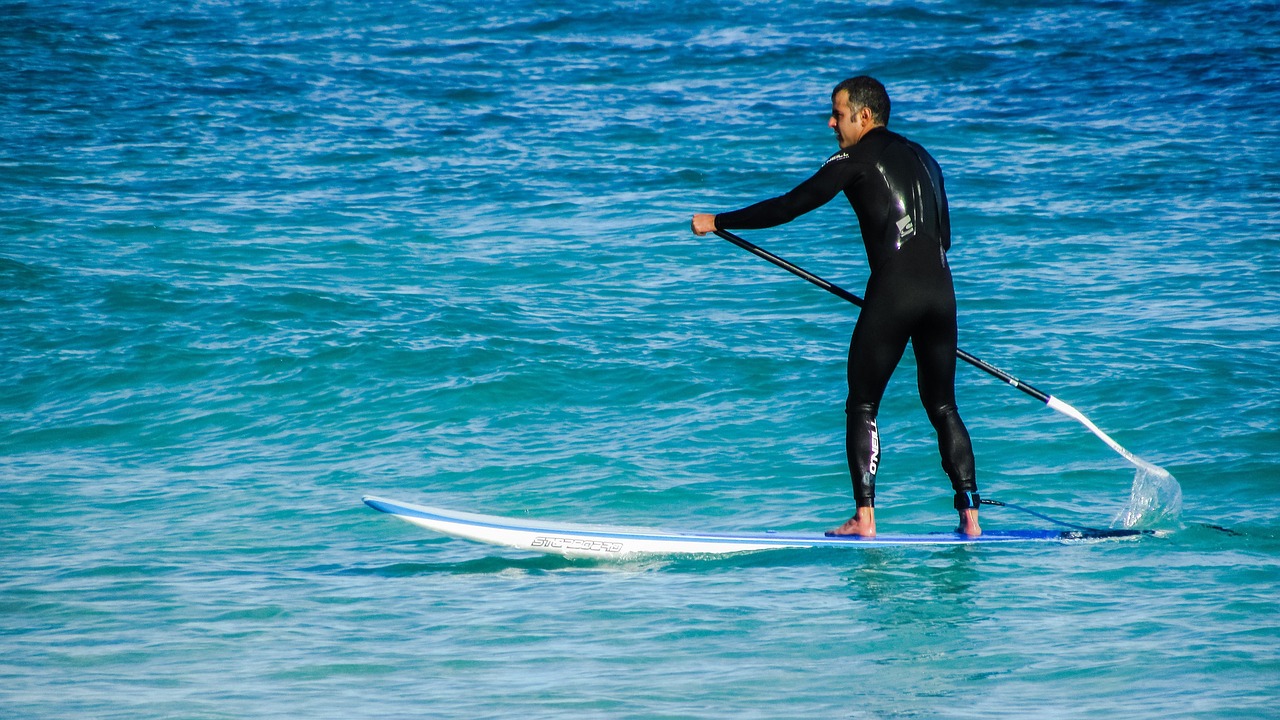
Hold it the right way round: the blade angles forward, away from you. An adjustable paddle lets a family share one and lets you shorten it for surf. Lighter paddles mean less work on every one of the thousands of strokes in a long paddle, which matters for shoulders: in one study, the shoulder and upper arm accounted for about a third of SUP injuries. The Aqua-Bound Freedom 85 has a 100% carbon shaft and an 85-square-inch fiberglass-reinforced blade, adjusts in length and breaks into four pieces to travel with an inflatable.
Leashes: the right one for the water
The American Canoe Association calls the leash a key piece of safety equipment in most, but not all, environments. Match it to the water:
- Flat lakes, tidal areas, slow rivers: coiled or hybrid, at the ankle or calf. It stays out of the water and keeps the board close.
- SUP surfing: a straight leash. A coiled leash can make the board snap back at you.
- Whitewater and moving water: only a waist-mounted leash with a quick-release you can reach with both hands, never at the ankle, because a snagged leash can pin you in current.
For rivers, the FunWater SUP Quick Release Belt (about $24) puts a pull-cord release on the front of a waist belt with a coiled leash. The Salamander Quick Release Belt with Leash is a river-specific break-away combo, and the NRS Quick-Release SUP Leash (about $60) clips to the quick-release belt of a rescue life jacket. Practice pulling the release on dry land and in calm water before you need it.
Life jackets (PFDs), whistle and light
Outside swim and surf areas the Coast Guard treats your board as a vessel, so you need a Coast Guard-approved life jacket for each person, a sound-producing device and, after dark, a white light. In the Coast Guard’s 2024 statistics, 26 of the 29 deaths on paddleboards were drownings. Two styles fit SUP:
- Foam paddling vest: always floats, needs no action, and works for everyone, including kids, weak swimmers and moving water, where NRS says you must wear foam. The Onyx MoveVent Dynamic (about $69) is Coast Guard and Transport Canada approved, with a mesh back and reflective trim.
- Inflatable belt pack: barely noticeable on flatwater, but you have to pull the cord to inflate it and put it on after you’re in the water. The Onyx M-16 is approved for ages 16 and up and over 80 lb, and isn’t recommended for weak swimmers. It only counts as your life jacket when you’re wearing it.
Clip a Fox 40 Classic whistle (about $7) to your jacket, and carry a waterproof headlamp or flashlight if you could be out near sunset. Kids’ sizes and fit are on our SUP with kids page, and the legal details on SUP rules and water safety.
Sun protection
Hours on open water with sun reflecting off the surface add up fast. The American Academy of Dermatology recommends a broad-spectrum, water-resistant sunscreen of SPF 30 or higher, reapplied every two hours and after getting wet. Clothing does a lot of the work:
- Sunscreen: Blue Lizard Sport Mineral SPF 50 (about $9), zinc oxide and titanium dioxide, 80-minute water resistance.
- Long sleeves: a UPF rash guard like the O’Neill Basic Skins long-sleeve (about $40).
- Neck and face: the BUFF Original EcoStretch (about $23, UPF 50 per the maker).
- Eyes: polarized sunglasses on a strap cut glare off the water; the KastKing Skidaway (about $25) has polarized lenses the maker says block 100% of UVA and UVB.
- A hat with a chin strap, and water on every paddle.
Dry bag and phone
A phone is your emergency call, so keep it dry and on you or clipped to the board. The Earth Pak 5L dry bag (about $18) is a 500D PVC roll-top that comes with a waterproof phone case, and slips under the deck bungees with keys, snacks and a layer.
Recovery gear for paddleboarders
Shoulders, lats, forearms and the lower back do the work, and feet ache from gripping the deck. Many paddlers use a foam roller like the TriggerPoint GRID 1.0 on the upper back and lats, a small massage gun like the Theragun Mini (about $220) on shoulders and forearms, and cushioned slides like OOFOS OOahh (about $60) after a long paddle. These are comfort tools, not treatment; pain that lingers is a reason to see a sports medicine doctor or physical therapist. More on our SUP recovery page, the best massage guns and the best recovery shoes.
The SUP bag checklist
- Board, fins, pump (check the PSI), paddle
- Leash matched to the water (quick-release waist belt for rivers)
- Life jacket for each person, whistle, light if near dusk
- Sunscreen, hat, sunglasses with strap, long-sleeve top; wetsuit or drysuit for cold water
- Phone in a waterproof case, water, a snack, a towel and dry clothes
Back to the paddleboarding hub, or see best wearables for SUP, SUP training and rules and water safety. Related: our kayaking section and the best recovery tools for athletes.
Paddleboarding gear questions
Is an inflatable paddleboard as good as a hard one?
For most recreational paddling, a good inflatable is tough, stable and far easier to store and carry. Hard boards are faster and more responsive, so racers and surfers usually prefer them.
How long should my SUP paddle be?
For flatwater, about 8 to 10 inches taller than you; for SUP surfing about 6 to 8 inches; for racing about 4 to 6 inches, per Aqua-Bound’s guide. An adjustable paddle lets you fine-tune.
What leash should I use on a river?
Only a quick-release leash attached at the waist, reachable with both hands, per the American Canoe Association. Never an ankle or calf leash in moving water.
Is an inflatable belt-pack life jacket OK for paddleboarding?
For adults 16 and older who swim well, on flatwater, many paddlers use one, and it counts only if you wear it. For kids, weak swimmers and moving water, wear a foam vest.
What else do I legally need besides a life jacket?
Outside swim and surf areas, a sound-producing device such as a whistle, and a white light if you’re out after sunset. Some states add rules or permits; check your state boating agency.