This article contains affiliate links: if you buy through them we may earn a commission, at no extra cost to you. Learn more.
The car the night before dawn patrol: board on the roof, wetsuit hanging off the back seat, a bar of wax rolling around the floor, sunscreen, a towel, a jug of fresh water to rinse off. Surfing doesn’t need much, but the right surfing gear makes a huge difference to how fast you learn, how long you stay warm and how safe you are. Here’s a simple guide: boards by level, wetsuits by water temperature, leashes, reef-friendly sunscreen, rash guards and the recovery kit for after.
Buying guide · Our Surfing buying guide compares the gear we'd pick, with prices and sizing:
Prices change often. The prices below are what we saw at the maker or a major retailer in October 2026; check the current price before you buy.
Our top picks
Wavestorm 8 ft Classic Soft Top
- 8 ft, 86 L foam board
- Fins, leash, traction pad included
- 11.5 lb
O'Neill Reactor-2 3/2 mm Back Zip Wetsuit
- 3/2 mm full suit
- Back zip
- Ultra stretch neoprene
FCS All Round Essential Leash
- 7 mm urethane cord
- For 2 to 8 ft surf
- 6, 7, 8 and 9 ft lengths
O'Neill Basic Skins Long Sleeve Rash Guard
- UPF 50+
- 4-way stretch
- Quick-dry
Badger Sport Mineral Sunscreen SPF 40
- Non-nano zinc oxide
- 80 min water resistant
- No oxybenzone or octinoxate
SurfEars 4.0
- Keeps water out, lets sound in
- 4 tip sizes
- Storage case
Theragun Mini (3rd gen)
- Pocket-size massage gun
- 3 speeds
- 3 attachments
OOFOS OOahh Slide
- OOfoam slide
- APMA Seal of Acceptance
- Machine washable
Surfboards by level
The single most common beginner mistake is a board that’s too small. More length, width and thickness (in other words, more volume, measured in liters) means more float, easier paddling and more waves caught. As you improve, you trade some float for a board that turns more easily.
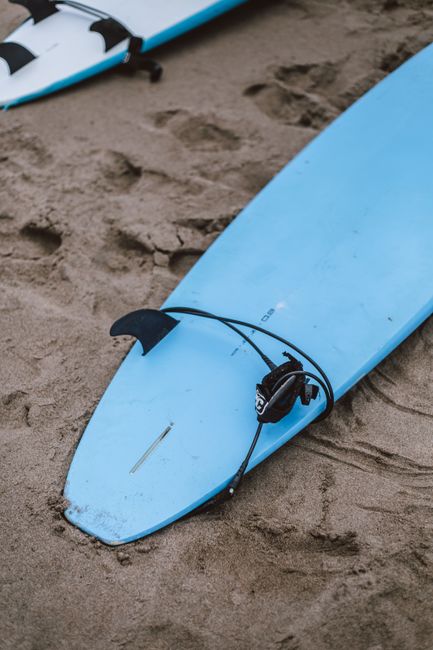
- Beginner: a big soft-top (foam) board. Around 8 ft or more for most adults, wide and thick. Foam is also kinder when the board hits you, which matters: being struck by your own board is the most common cause of surfing injuries, and researchers suggest foam boards in crowded or dangerous spots to lower the risk. The Wavestorm 8 ft Classic (about $300 on Amazon) is 8 ft × 22.5 in × 3.25 in, 86 liters and 11.5 lb, with an EPS core, three stringers, a slick bottom, and fins, an ankle leash and a traction pad in the box.
- Improving: a mid-length, funboard or longboard. Once you can catch unbroken waves and ride along the face, a 7 to 8 ft mid-length or funboard turns more easily but still paddles well. Longboards (around 9 ft and up) are a whole style of their own, built for glide, trim and nose riding.
- Advanced: shortboards and fish. Shortboards are short, narrow and thin for sharp turns in good waves; fish are shorter and wider, fun in small, mushy surf. They need strong paddling and quick pop-ups.
Hard boards need surf wax on the deck (or a traction pad at the tail) for grip; most foam boards don’t. Ask a local surf shop what works on your local waves; they’ll often have used boards, which are a smart way to try a shape.
Check the Wavestorm 8 ft Classic price on Amazon
Wetsuits by water temperature
Wetsuit thickness is written as two numbers in millimeters: “4/3” means 4 mm on the torso for warmth and 3 mm on the arms and legs for movement. O’Neill’s thickness guide gives these ranges:
| Water temperature | What to wear (O’Neill guide) |
|---|---|
| 79°F and up (26°C+) | UV shirt or rash guard |
| 70 to 77°F (21–25°C) | 2 mm suit or shorty |
| 64 to 68°F (18–20°C) | 3/2 mm or 4/3 mm full suit |
| 54 to 63°F (12–17°C) | 4/3 mm or 5/4 mm full suit |
| 46 to 52°F (8–11°C) | 5/4 mm or 6/5 mm, with hood, gloves and boots |
| 39 to 45°F (4–7°C) | 7 mm and up, full accessories |
O’Neill also notes that thicker suits restrict movement and can make you overheat, so match the suit to the water. Wind, air temperature and how much you feel the cold all shift the choice; if you’re between two, think about the coldest days you’ll surf. Fit is everything: snug everywhere with no water pockets at the lower back or armpits, but you should be able to raise your arms and breathe deeply.
For a first full suit in spring and fall water, the O’Neill Reactor-2 3/2 mm Back Zip (about $145 to $160 depending on size) is a value-focused entry suit with a back zip for easy entry, stretch neoprene and wind-resistant smoothskin that the maker says adds insulation against the cold.
Check the O'Neill Reactor-2 price on Amazon
Leashes
A leash keeps your board close, so you don’t have to swim after it and it doesn’t hit other surfers. Leashes come in lengths matched to the board (FCS sells its All Round Essential in 6, 7, 8 and 9 ft) and in cord thicknesses for the wave size. Thinner “comp” cords cut drag in small surf; thicker cords hold in bigger waves. The FCS All Round Essential (about $52) has a 7 mm urethane cord for 2 to 8 ft surf, an in-cuff silicone grip and an easy-release tab. The Creatures of Leisure Reliance 2.0 Standard Duty (about $49) is another 7 mm all-rounder rated for medium to large waves. Longboarders often wear a calf leash so it stays out of the way of their feet. Check the cord, swivel and the string at the board (the “rail saver”) for wear, and replace a leash with nicks in the cord.
Check the FCS All Round Essential Leash price on Amazon
Reef-safe sunscreen and rash guards
Hours on reflective water make sun protection part of your gear. The American Academy of Dermatology recommends a broad-spectrum, water-resistant sunscreen of SPF 30 or higher, reapplied every two hours and after swimming. NOAA lists sunscreen chemicals that can harm corals, including oxybenzone, octinoxate, octocrylene and some nanoparticle forms of zinc oxide and titanium dioxide, and suggests sunscreens without them plus UPF clothing. Hawaii’s Act 104 banned the sale of sunscreens with oxybenzone or octinoxate from January 1, 2021, and some other places have their own rules, so check before you travel. Labels vary, so read the active ingredients rather than trusting the words “reef safe.”
The Badger Sport Mineral SPF 40 (about $18 for 2.9 oz) uses non-nano, uncoated zinc oxide with four ingredients in all, is water resistant for 80 minutes, and the maker says it complies with Hawaii’s Act 104. For the face, the matching Badger SPF 35 face stick (about $13) is easy to reapply in the lineup. The Blue Lizard Sport SPF 30+ (about $9) is a cheaper zinc-based option without oxybenzone or octinoxate, though the maker says it combines mineral and chemical filters.
Check the Badger Sport Mineral SPF 40 price on Amazon
A rash guard does double duty: it stops wax rash on your chest and belly and blocks the sun without any sunscreen to wash off. The O’Neill Basic Skins long sleeve (about $15 to $40 depending on size and color) is UPF 50+, quick-drying and stretchy; the youth version is on our youth surfing page.
Check the O'Neill Basic Skins rash guard price on Amazon
Ear plugs for cold water
Surfer’s ear, bony growth in the ear canal, is linked to repeated cold water and wind. In a study of 202 avid surfers, 38% had it, and surfing mostly in colder water raised the odds about 5.8 times. Many cold-water surfers wear ear plugs and a hood. SurfEars 4.0 (about $70) are made to keep water out while letting sound in, and come with four tip sizes and wing options for fit. Our sources don’t show that plugs prevent surfer’s ear, but they’re a simple step. If water gets trapped in your ears often, see an ear, nose and throat doctor.
Check the SurfEars 4.0 price on Amazon
Recovery gear for surfers
Paddling loads the shoulders, lats and upper back, and research links overuse injuries in surfers to paddling. After a long session, many surfers roll out the upper back and use a small massage gun such as the Theragun Mini (about $220, three speeds, three attachments). On the walk back from the beach, recovery slides like the OOFOS OOahh (about $60, washable, APMA Seal of Acceptance) beat cold flip-flops. These are comfort tools, not treatment. If a shoulder hurts for more than a few days, see a sports medicine doctor, physical therapist or athletic trainer. Compare more in our best massage guns, best foam rollers and best recovery shoes guides, and see the surfing recovery page for the routine.
Check the Theragun Mini price on Amazon
Check the OOFOS OOahh Slide price on Amazon
The surf bag checklist
- Board, leash and fins (plus a fin key), wax or traction pad
- Wetsuit for the water temperature, or a rash guard and board shorts
- Water-resistant mineral sunscreen and a face stick, hat and sunglasses for the beach
- Ear plugs for cold water, a towel or changing poncho, a jug of fresh water to rinse
- Water bottle and a snack; for long sessions see our session day page
- A small first-aid kit for reef cuts
Back to the surfing hub, or see surf etiquette, surfing injuries, the best wearables for surfers and soccer gear for comparison.
Surfing gear questions
What surfboard should a beginner buy?
A big soft-top foam board, around 8 ft or more for most adults. It floats you, catches waves easily and hurts less if it hits you. Move to a smaller board once you can catch unbroken waves on your own.
What thickness wetsuit do I need?
It depends on the water. O’Neill’s guide suggests a 3/2 or 4/3 mm suit around 64 to 68°F, a 4/3 or 5/4 mm suit from 54 to 63°F, and 5/4 mm or thicker with hood, gloves and boots below that. Above about 70°F, a shorty or rash guard is usually enough.
How long should my surf leash be?
Leashes are sold in lengths to match the board, such as 6 ft for a shortboard and 9 ft for a longboard. Pick a thicker cord for bigger waves and a thinner one for small surf.
What makes a sunscreen reef safe?
Labels vary, so check the active ingredients. NOAA lists chemicals that can harm corals, including oxybenzone, octinoxate and octocrylene, and Hawaii bans the sale of sunscreens with oxybenzone or octinoxate. Look for a non-nano zinc oxide formula and cover up with a rash guard.
Do I need a rash guard to surf?
Not required, but very useful. It prevents rash from wax and the board, and a UPF 50+ rash guard blocks the sun without needing reapplication. Many surfers wear one under a wetsuit, too.