This article contains affiliate links: if you buy through them we may earn a commission, at no extra cost to you. Learn more.
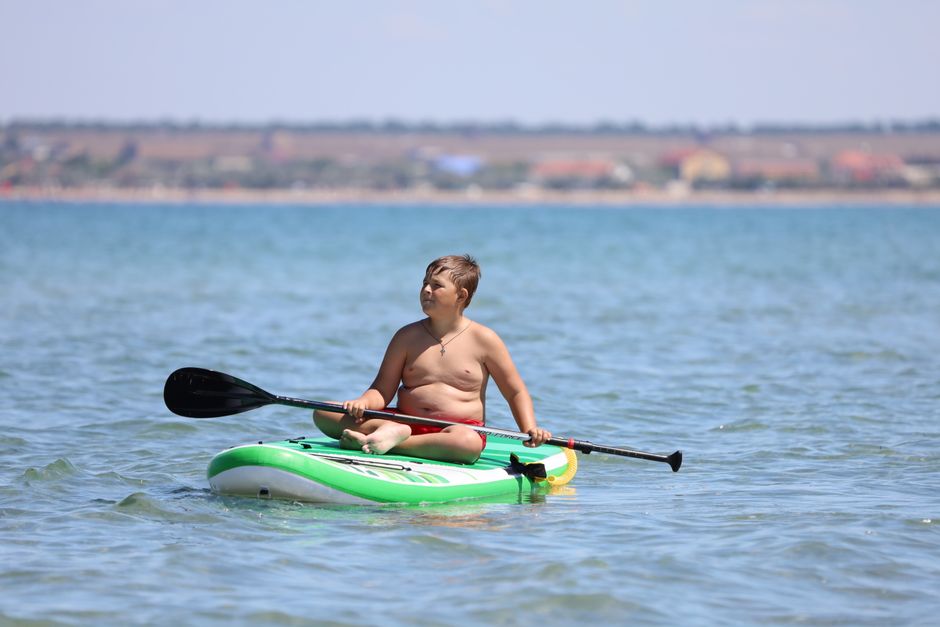
A calm cove on a summer morning. A four-year-old in a bright life jacket sits cross-legged on the front of a parent’s board, trailing a hand in the water and pointing at every fish. A few summers later she’s on her own little board, paddling circles around the dock, falling in on purpose and climbing back on, laughing. Paddleboarding with kids is one of the easiest ways to share the water as a family, and with a few simple rules it’s a safe one. This page is for parents: swimming first, life jackets, riding together, kids’ gear, lessons, and the questions parents ask most.
For the big picture of the sport, start at our paddleboarding hub.
Swimming comes first
There’s no official minimum age for SUP, but there is an order of things. The CDC says formal swimming lessons can reduce the risk of drowning, and drowning is the leading cause of death for children ages 1 to 4. The American Academy of Pediatrics’ 2026 drowning prevention statement recommends swim lessons for most children from age 1, several layers of protection, and life jackets in open water, and it warns that teens often overestimate their swimming skills. A paddleboard puts kids on open water, so they should be comfortable in deep water and know what to do when they fall in: come up, find the board, hold on. Our youth swimming page covers how kids learn.
Life jackets for kids: the rules and the fit
- The law: outside swim and surf areas a paddleboard is a vessel, and under federal rules children under 13 must wear a Coast Guard-approved life jacket on a vessel that’s underway. Where a state has its own child-wear rule, that rule applies; Oregon, for example, requires children 12 and under to wear one on any boat, paddleboards included.
- Size by weight: child life jackets are approved for weight ranges printed on the label, such as “less than 30 lbs,” “30 to 50 lbs” or “50 to 90 lbs.” Buy for your child’s weight now, not the weight they’ll grow into.
- Fit test: the Coast Guard says fit, snug but not tight, is the most important thing. Safe Kids Worldwide’s check: buckle everything, have your child raise their arms, then lift the jacket by the shoulders. If it rides up past the chin or ears, it’s too big or too loose.
- Foam, not inflatable: the Coast Guard doesn’t recommend inflatable life jackets for anyone under 16 or for non-swimmers, and belt packs are labeled for ages 16 and up. Kids wear foam.
- Grown-ups too: kids copy you. In the Coast Guard’s 2024 data, 26 of the 29 people who died on paddleboards drowned. Wear yours.
For little ones about 30 to 50 lb, the Stearns Original Puddle Jumper (about $30) is Coast Guard approved as a Type V/III device. Bigger kids move to a vest: the Stearns youth life jacket (about $47) is a Coast Guard-approved Type III for 50 to 90 lb. Clip a Fox 40 whistle (about $7) to it and teach them to blow it hard whenever they need help.
Riding together: kids on your board
- Pick the right day and place: calm, sheltered water, light wind, warm weather, close to shore and away from boat traffic. Stay out of channels.
- Check the weight limit: add up you, your child and any gear (and the dog), and stay well under the board’s rated capacity. A wide all-around board is the most stable.
- Kid in front, sitting or kneeling, so your center of gravity stays low. Start on your knees yourself until you both feel steady.
- Practice falling in near shore: fall away from the board, come up, grab the board. Then practice climbing back on.
- Keep it short. Young kids get cold and bored fast. Twenty happy minutes beats an hour of misery.
Their own board, paddle and leash
Once kids can paddle a few strokes on their own, a smaller, lighter board they can carry and steer makes a big difference; an adult board is a lot to handle for a small child. Size the paddle to them, not you: for flatwater, paddle makers suggest a paddle about 8 to 10 inches taller than the paddler, and an adjustable paddle grows with them. Teach the blade angle early (it tilts forward, away from them). On flatwater, use a coiled leash so the board can’t blow away. On any moving water, the American Canoe Association’s rule applies: only a quick-release leash at the waist, reachable with both hands, never at the ankle. Most families leave rivers until kids are older and have had lessons. Our paddleboarding gear page covers boards and paddles.
Lessons and camps
A lesson turns a nervous first try into a confident one. Look for:
- A certified instructor. The ACA’s Level 1 Introduction to SUP course covers stances, strokes, falling safely, self-rescue, etiquette, safety planning and life jackets. The ACA’s online listing lets you search for certified SUP instructors by state.
- Life jackets on at all times, sized to each child, and checked by staff.
- Calm water and a weather plan, including wind limits and getting off the water at the first thunder.
- A low ratio of kids to instructors and a rescue plan. Ask what it is.
Wind, cold water and sun
- Wind: kids are light and their boards catch the wind. Offshore wind (blowing from land out to the water) can push a young paddler out faster than they can paddle back while the water near shore looks calm. Teach them to kneel or lie down and paddle with their hands, and to stay close. Never let kids paddle alone.
- Cold water: the Coast Guard describes cold shock (a gasp and fast breathing for about a minute) and loss of useful movement within about 10 minutes in cold water. Small bodies cool quickly; dress them for the water temperature, with a wetsuit or a warm layer, and get them out as soon as they start shivering.
- Sun: sun reflects off water and there’s no shade on a board. The American Academy of Dermatology recommends a broad-spectrum, water-resistant sunscreen of SPF 30 or higher, reapplied every two hours and after getting wet. Blue Lizard Sport SPF 50 (about $9) is a mineral lotion that fits in a pocket. Add a hat and a long-sleeve UPF shirt.
- Water and snacks: bring both, even for a short paddle.
Bumps, falls and concussion
Most kids’ paddleboarding mishaps are bumps from the board or paddle and scrapes on rocks or docks. Teach them to fall flat and away from the board, never head-first into shallow water. If a child hits their head, follow the CDC HEADS UP approach: watch for headache, dizziness, confusion, nausea or acting differently, take them off the water for the rest of the day, and see a doctor before they paddle again. “When in doubt, sit them out.” For young racers, the American Academy of Pediatrics suggests 1 to 2 days off a week from organized sport, and ongoing shoulder or back pain is a reason to see a pediatric sports medicine doctor, physical therapist or athletic trainer. Our SUP injuries page has more.
Racing for young paddlers
Kids who love it can race. Local race series often have short kids’ courses, and at the top, the 2026 ICF SUP World Championships run by Paddle Worldwide include kids’ races for ages 12 to 15 and junior categories, while the ISA’s world championship has under-18 technical races for boys and girls. Racing courses go from short sprints to technical courses with buoy turns; our SUP rules and race formats page explains them, and SUP associations covers clubs and events.
What kids need on the water
Prices change often. The prices below are what we saw at the maker or a major retailer in October 2026; check the current price before you buy.
Stearns Original Puddle Jumper
- USCG approved Type V/III
- Kids 30 to 50 lb
- Soft woven polyester
Stearns Youth Life Jacket (50-90 lb)
- USCG-approved Type III
- Kids 50 to 90 lb
- Closed-sided design
Blue Lizard Sport Mineral Sunscreen SPF 50
- Zinc oxide and titanium dioxide
- 80-minute water resistance
- 3 oz, fits a pocket
Fox 40 Classic Safety Whistle
- No-pea design
- Loud and reliable (maker)
- About $7
Back to the paddleboarding hub, or see SUP rules and water safety, gear and clubs and races. Other water sports for kids: youth surfing and youth sailing, and our kayaking section.
SUP with kids: parents’ questions
What age can kids start paddleboarding?
There’s no official minimum age. Toddlers and preschoolers can ride on a parent’s board in calm water wearing a properly fitted life jacket. Kids usually paddle their own board once they’re comfortable swimming and can follow instructions on the water.
Does my child have to wear a life jacket on a paddleboard?
Outside swim and surf areas, yes: federal rules require children under 13 to wear a Coast Guard-approved life jacket on a vessel underway, and a paddleboard counts. Some states set a different age. We’d say every child should wear one every time, whatever the law.
Can my child use an inflatable belt-pack life jacket?
No. Inflatable life jackets are generally approved for ages 16 and up, and the Coast Guard doesn’t recommend them for anyone under 16 or for non-swimmers. Kids need a foam life jacket sized to their weight.
Can two people ride one paddleboard?
Yes, on calm water, if the combined weight is well under the board’s rated capacity. Have the child sit or kneel in front, both wear life jackets, and stay close to shore.
Should kids wear a leash?
On flatwater, a coiled leash keeps the board, a big floating safety platform, close. On rivers or any moving water, only a quick-release waist leash, never an ankle leash; most families wait until kids are older and trained.
Is paddleboarding good exercise for kids?
It builds balance, core strength and confidence on the water, and it’s fun. Keep sessions short at first, mix in swimming and play, and give young racers regular days off.