This article contains affiliate links: if you buy through them we may earn a commission, at no extra cost to you. Learn more.
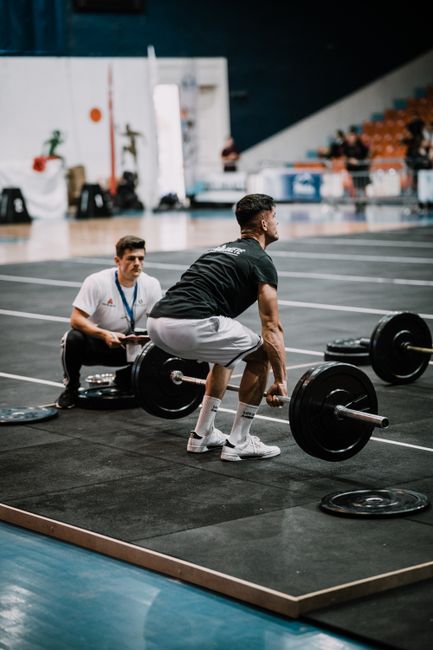
Third attempt on the bench at a local powerlifting meet. The bar comes down, pauses on the chest, the head referee calls “Press”, and the bar starts up, then stops two inches short. Before anyone in the crowd has time to gasp, the spotter/loaders have the bar and it’s back in the rack. The lifter sits up, shakes it off and walks to the back. That’s what a well-run platform looks like, and it’s a good picture of powerlifting injuries in general: the sport moves the heaviest weights in the gym, but most of the risk can be managed with good habits, good people around you and an honest read of your own body. This page covers the injuries that show up in the squat, bench press and deadlift, what the research says about how often they happen, and the warning signs that mean “stop and get it checked”, from high school lifters to masters.
This page is general information, not medical advice. If you’re hurt, see a sports medicine doctor, physical therapist (PT) or certified athletic trainer (AT). For the bigger picture of the sport, start at our powerlifting hub.
How often do powerlifters get hurt?
Less often than many people think, if you count injuries the way most sports do. A 2017 systematic review in the British Journal of Sports Medicine pooled the studies and found 1.0–4.4 injuries per 1,000 hours of training in powerlifting, similar to other non-contact sports, with the spine, shoulder and knee the most common places. A German survey of 245 competitive and elite powerlifters from 97 clubs worked out to about one injury per 1,000 hours of training (0.3 injuries per lifter per year), again with the shoulder, lower back and knee on top. Most of these studies are small or rely on lifters’ memories.
The picture changes when you count the aches that change your training without stopping it. In the German survey, 43% of lifters had problems during routine workouts. In a 2018 survey of 104 Swedish sub-elite classic powerlifters, 70% were dealing with a current injury (defined as pain or impairment that affected training) and 87% had one in the past year, yet only 16% of those currently injured had stopped training completely. The low back and pelvis, shoulder and hip were most affected. The authors’ takeaway: managing training load and refining technique in the squat, bench and deadlift probably matter most.
In the German study, lifters over 40 had more shoulder, elbow and wrist problems, and belt users reported more low back injuries, an association that doesn’t prove belts cause them. Outside competitive lifting, gym accidents are a different story: a study of US emergency-department visits from weight training (1990–2007) estimated about 970,800 injuries nationwide, and 65.5% happened when weights dropped on the person. That’s why bar safety gets its own section below.
The most common powerlifting injuries
Low back (squat and deadlift)
Heavy squats and deadlifts load the spine, and the low back tops the injury lists. Most of it is muscle soreness or strain. The American Academy of Orthopaedic Surgeons (AAOS) notes that most low back pain goes away within a few weeks. It also lists the signs that need prompt medical care: weakness in a leg, numbness or tingling running down to the foot, loss of bladder or bowel control, or fever, chills or unexplained weight loss with back pain. A coach’s eye and sensible volume help more than any piece of gear.
Shoulder (bench press and low-bar squat)
The bench press is the most shoulder-heavy lift in the sport, and holding a low-bar squat on the back asks a lot of shoulder mobility too. AAOS describes shoulder impingement and rotator cuff tendinitis as pain at the front and side of the shoulder that’s worse with overhead movement and lifting, sometimes at night. The usual first steps are rest, changing the movements that hurt and physical therapy, and it can take weeks to months to settle. Pain that keeps you up at night or a shoulder that suddenly loses strength deserves a doctor’s look.
Hip and knee (squat)
Squatting to competition depth, with the hip crease below the top of the knee, is the heart of the sport. The most common knee complaint is pain at the front of the knee (patellofemoral pain), which AAOS links to overuse, sudden jumps in training and weak or imbalanced thigh and hip muscles; it’s often managed with strengthening under a PT’s guidance. Much rarer, but serious, is a patellar tendon tear: AAOS describes a tearing or popping sensation, then being unable to straighten the knee, often with the kneecap sitting higher than normal. A complete tear needs prompt surgical care. Many lifters wear knee sleeves for warmth and comfort; our knee sleeve guide compares the popular 7 mm pairs.
Pec tears on the bench
This is the injury every powerlifter has heard about. AAOS explains that the pectoralis major tendon is most at risk during an eccentric load, the lowering phase of a bench press, and that it mostly affects men aged 30 to 60. Weightlifting and anabolic steroid use are both listed as risk factors. Lifters describe a “pop” or ripping feeling, then pain, weakness, bruising on the chest and inner arm, and a chest or armpit line that looks uneven. Get medical care right away: AAOS notes that surgical repair works best when done soon after the injury, and full return takes at least six months.
Wrist, elbow and hands
A heavy bench puts the wrist in extension under load, a low-bar squat can bend the wrists back and strain the elbows, and the deadlift tests grip and the skin of your palms. AAOS describes tennis elbow (lateral epicondylitis) as pain or burning on the outer elbow and a weaker grip, developing gradually; it lists repetitive work and weightlifting among the causes and notes that about 80–95% of people do well without surgery. Wrist wraps are standard gear on heavy bench days. For how stiff and how long to go, see our wrist wrap guide.
Spotting and bar safety
- Bench with a spotter or safeties. The NSCA’s strength-coaching textbook says free-weight exercises with the bar over the face or on the back usually need one or more spotters. On the bench, the spotter stands behind the lifter’s head with both hands following the bar, and doesn’t touch it unless needed or asked. Agree on the lift-off and the signal before the set. Alone? Set the rack’s safety pins or straps just below chest height when you’re lying on the bench. Many coaches also advise against a thumbless (“suicide”) grip.
- Squat inside a rack. Set the safeties just below your bottom position so a missed rep has somewhere to go, and learn to dump a failed squat onto them.
- Deadlifts don’t get spotted. If a pull won’t lock out, set it down under control rather than fighting it with a rounded back.
- Collars every time. Plates sliding off one side is a classic way for a bar to tip.
- Spotters change the set. In a small 2019 study, recreational lifters did about 4.5 more bench reps when they knew spotters were there. At meets, IPF rules require two to five spotter/loaders on the platform at all times. How the referees and platform work is on our powerlifting rules page.
Head injuries are uncommon in powerlifting, but a bar rolling off the chest, a missed squat or a fall can happen. If anyone might have a concussion, the CDC’s HEADS UP advice applies: stop, keep them out for the day and have a health care provider check them before they train again.
How powerlifters lower the risk
- Get coached and film your lifts. A qualified coach and regular side-on video catch problems before they become pain.
- Build load gradually and plan lighter weeks. How to do that, including deloads and peaking for a meet, is on our powerlifting training page.
- Warm up with the lift itself, working up from the empty bar.
- Respect the small aches. In the Swedish study most injured lifters kept training; adjusting the exercise or load early is easier than a long layoff later.
- Young lifters: supervised, technique-first training with sensible loads. See youth powerlifting.
- Stay clean. Anabolic steroids appear on AAOS’s risk-factor lists for both pec and patellar tendon tears, on top of breaking the rules in tested federations.
- Recover like it’s part of the program, because it is. See recovery for powerlifters.
Gear many powerlifters keep in the bag
None of these prevent injuries or replace rehab, but plenty of lifters train with a 7 mm sleeve like the Rehband RX Knee Sleeve, wraps like the Gymreapers 18″ Wrist Wraps on heavy bench days, and a foam roller like the TriggerPoint GRID for warm-ups. Belts, shoes and meet-legal equipment are covered on our powerlifting gear page.
Rehband RX Knee Sleeve 7mm
- 7 mm neoprene, sold as a pair
- 4-panel anatomic shape
- About $90
Gymreapers 18-inch Wrist Wraps
- 18 x 3 in, thumb loop
- Maker: IPF and USAPL approved
- About $20
TriggerPoint GRID 1.0
- 13 in, hollow core
- Multi-density surface
- About $40
When to see a sports medicine doctor, PT or athletic trainer
- Right away: a pop in the chest with bruising and weakness (possible pec tear), a pop at the knee and you can’t straighten it, a bar dropped on the head or neck, back pain with leg weakness or loss of bladder or bowel control.
- Within a day or two: a joint that swells quickly, sharp pain that stopped the session, numbness or tingling in a hand or foot.
- Soon: pain that’s been changing your training for more than a couple of weeks, night pain in a shoulder, elbow pain that keeps coming back.
A sports medicine physician diagnoses and decides on imaging; a physical therapist guides rehab and the return to heavy loads; a certified athletic trainer is often the first contact on school and college teams. Look for professionals who work with lifters. Train the snatch and clean and jerk too? Our weightlifting injuries page covers the overhead lifts.
Powerlifting injuries: FAQs
Is powerlifting dangerous?
Not unusually so. A 2017 systematic review found about 1.0–4.4 injuries per 1,000 training hours in powerlifting, similar to other non-contact sports, and a German survey put it at about one per 1,000 hours. Minor aches that change training are much more common, so load management and technique matter.
What’s the most common powerlifting injury?
The low back, shoulder, hip and knee lead the lists. In a survey of Swedish classic powerlifters, the lumbopelvic region, shoulder and hip were most often affected; German lifters reported the shoulder, lower back and knee most.
How do I know if I tore my pec?
AAOS lists a pop or ripping feeling during a press, sudden pain and weakness, bruising across the chest and inner arm, and an uneven chest or armpit line. See a doctor promptly, because repair works best when done soon after the injury.
Does a lifting belt prevent back injuries?
There’s no proof that it does. Lifters use belts to brace on heavy sets. In one German survey, belt users reported more low back injuries, possibly because lifters with sore backs wear belts more. Technique and sensible loading come first.
Do knee sleeves prevent injuries?
There’s no good evidence that they do. Lifters use them for warmth, comfort and a snug feel, and one small study found slightly heavier squats with neoprene sleeves. Treat them as comfort gear, not protection.
Can I keep training with back pain?
Many lifters adjust rather than stop, and AAOS notes most low back pain settles within a few weeks. But leg weakness, numbness running to the foot or bladder and bowel changes need medical care right away. If you’re unsure, ask a sports medicine doctor or PT to help you plan what to train in the meantime.