
This article contains affiliate links: if you buy through them we may earn a commission, at no extra cost to you. Learn more.
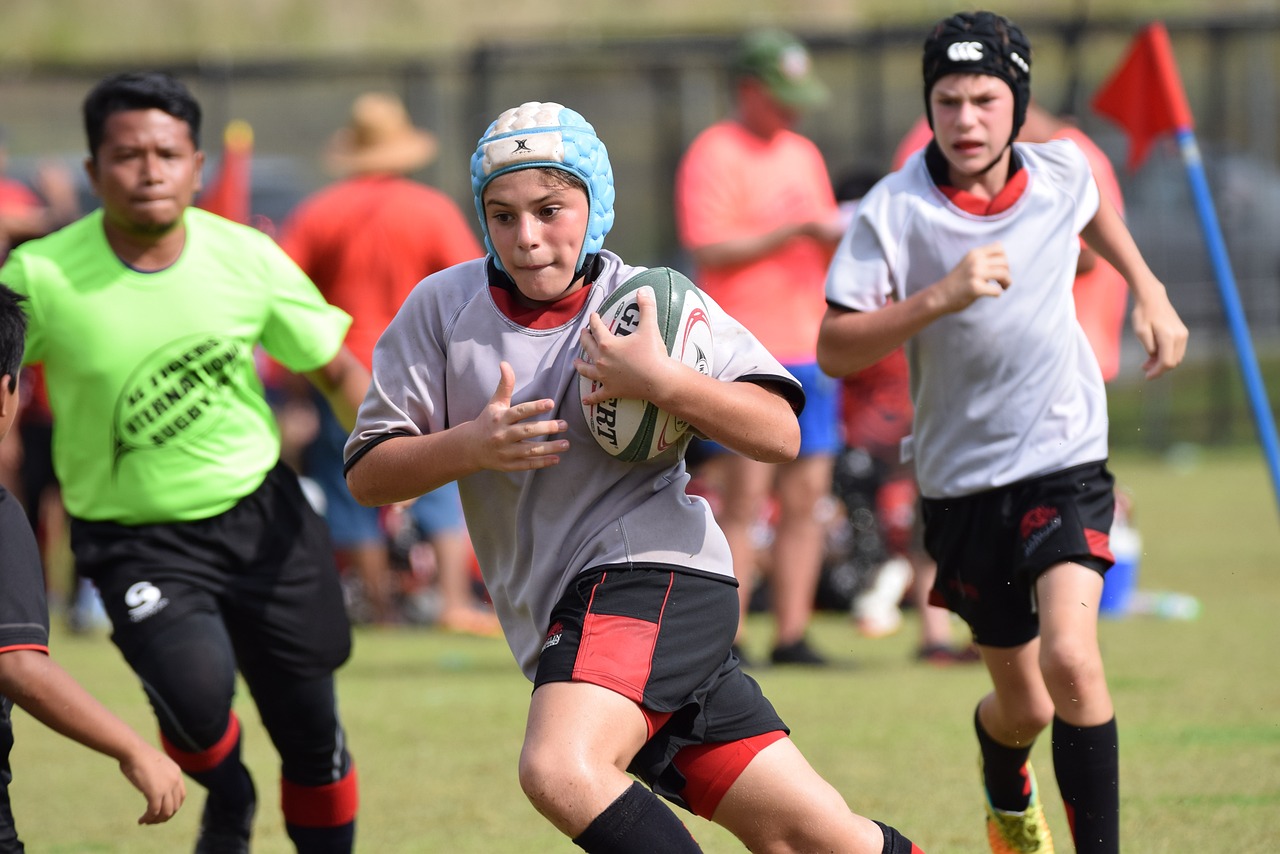
Saturday morning, a field of cones, and a dozen 7-year-olds in colored flag belts chasing one oval ball, shrieking every time someone rips a flag. Nobody’s been tackled, everybody’s been running, and on the drive home they’re already asking when the next practice is. That’s how youth rugby starts in the US: as flag rugby, with contact brought in step by step as kids grow. This guide is for parents and coaches: the age grades, when tackling starts, the safety rules and programs built to make the tackle safer, concussion, gear, and the questions parents ask most.
Who runs youth rugby
USA Youth & High School Rugby (USA YHS), an affiliate of USA Rugby, is the sanctioned governing body for rugby players aged 5 to 18. It works through 47 state youth rugby organizations and more than 900 clubs, which run leagues, referees and state championships for boys and girls. Its “Get Into Rugby” form connects families with a local club. Rules vary a little by state, so always check your state organization’s age-grade rules.
Ages and formats: from flag to full contact
USA YHS describes a careful progression: non-contact rugby from U5 to U10, contact introduced gradually from about U10 to U14, and full-contact rugby from U14 to U18. Here’s how one state program, Rugby NorCal, set up its younger age grades for 2023-24:
| Age grade | Contact | Players | Halves | Ball |
|---|---|---|---|---|
| U8 | Non-contact flag; restart with a tap where the flag was pulled | 8 | 15 min | Size 3 |
| U10 | Tackle, only below the armpits; no jersey slings | 10 | 15 min | Size 4 |
| U12 | Tackle, only below the armpits; no jersey slings | 12 | 20 min | Size 4 |
| High school (U19 laws) | Full contact with under-19 safety laws | 15 (or 7 in sevens) | 35 min | Size 5 |
Two details show how youth rugby is built around safety. In Rugby NorCal’s U10 and U12, players are weighed before games, and bigger players (140 lb and up at U10, 170 lb and up at U12) wear red socks and can’t be used to bowl over smaller kids. And at those ages, referees are told to penalize any tackle above the armpits immediately and to stop play whenever a player’s safety is at risk. Ball sizes follow the same idea: Gilbert, for example, recommends size 3 for ages 7–10, size 4 for 11–13 and size 5 from 14 up, but your league’s rules come first.
Rookie Rugby and flag rugby
Rookie Rugby is USA Rugby’s non-contact flag program, relaunched with Major League Rugby and USA YHS as a free curriculum that PE teachers can use. It runs from PE class to after-school flag rugby to a local club. A pilot in 2021-22 reached more than 27,000 students in 175 schools across eight states, and the goal is 50,000 schools by the 2031 Rugby World Cup. Flag rugby needs nothing more than a ball, cones and a set of flag belts, so it’s an easy way to see if your child likes the game.
High school rugby and the under-19 laws
High school players play the full game with World Rugby’s under-19 variations: 70-minute games, front-row and lock players who must be trained for those positions (or the scrums become uncontested), and no pushing the scrum more than 1.5 meters or wheeling it on purpose. USA Rugby’s 2026-27 guidelines add no “squeeze ball” at the ruck and no fending to the face, head or neck in under-19 rugby, and the legal tackle height in US community rugby is now the base of the sternum. Many teams play 15s in one season and sevens in another. Our rugby rules page explains the full game.
Making the tackle safer
The tackle is where most youth rugby injuries happen: a 2023 review of 69 studies of youth rugby found it caused 55% of match injuries in boys and 71% in girls. That’s why so much youth rugby safety work goes into teaching it well:
- Learn before you hit: World Rugby’s free Tackle Ready resource teaches the tackle in five stages (tracking, preparation, connection, acceleration, finish) with drills for every age. Good youth coaches teach falling safely and tackling on knees or at walking pace long before full-speed contact.
- Tackle low, head to the side: lower tackles cut concussion risk for ball carriers, and tacklers are safest hitting the torso; a study of rugby league tackles found the most head injuries when the tackler’s head was in front of the ball carrier.
- Warm up with Activate: World Rugby’s free warm-up has three age-grade versions. In a trial of 3,188 schoolboy players aged 14–18, teams that did it three or more times a week had 72% fewer match injuries and 59% fewer concussions.
- Certified adults: USA Rugby coaches must complete SafeSport training, a background screening, concussion-management training and a coaching course.
Concussion in youth rugby
The 2023 youth review found concussion was the most common injury type in girls, and girls’ concussion rates were higher than boys’, though only a few studies covered girls. Every parent and coach should know two rules. First, the CDC’s HEADS UP signs: a child who looks dazed or confused, is slow to answer, has a headache, dizziness, balance problems, blurred vision or sensitivity to light or noise, or just “doesn’t feel right”. Second, World Rugby’s Recognise and Remove:
- Any player with a suspected concussion is removed immediately and doesn’t return that day.
- They aren’t left alone in the first 24 hours, and they see a healthcare professional.
- World Rugby’s community guidance sets a minimum 21-day stand-down from playing, counting the day of injury as day 0, then a staged return.
- Call 911 for danger signs: seizures, worsening headache, repeated vomiting, growing drowsiness or confusion, or one pupil larger than the other.
A scrum cap doesn’t prevent concussion; research hasn’t found that soft rugby headgear protects against head injury. For more on injuries and when to see a sports medicine doctor, physical therapist or athletic trainer, see our rugby injuries page.
What your child needs
Rugby is cheap to start. For flag rugby: sneakers or cleats, shorts and a water bottle; the club usually provides flag belts and balls. For contact rugby: rugby or soccer cleats with no metal blades, a mouthguard (USA Rugby says every player should wear one every time they play contact rugby, with nothing sticking out of the mouth), and optionally a World Rugby-approved scrum cap. Hard plastic pads, helmets and braces from other sports aren’t allowed. Good starter picks: MIUONO flag belts (10 belts, about $28) for backyard or team flag rugby, a Gilbert A-XV ball (about $25, in sizes 3, 4 and 5), the OPRO Gold self-fit mouthguard (about $20, in kids’ and adult sizes; not for fixed braces) and the Gilbert Falcon 200 scrum cap (about $50). Our rugby gear guide has the details.
MIUONO Flag Belts (10-Player Set)
- 10 belts, 30 flags
- Fits waists up to 45 in
- About $28
Gilbert A-XV Training Rugby Ball
- Sizes 3, 4 and 5
- Hand-stitched
- About $25
OPRO Gold Level Mouthguard
- Self-fit, no strap
- Kids' and adult sizes
- About $20
Gilbert Falcon 200 Scrum Cap
- World Rugby approved (retailers)
- Open ear sections
- About $50
Heat and recovery matter for kids too: tournament days mean several games, so pack water and snacks, find shade between games, and make sure they sleep (the CDC recommends 9–12 hours for ages 6–12 and 8–10 for teens). Back to the rugby hub, or see rugby leagues and associations for the high school and college pathway, and our youth soccer guide if your child plays both.
Parents’ questions about youth rugby
At what age does tackling start in youth rugby?
Usually around U10. USA YHS keeps the youngest players (U5–U10) in non-contact rugby and brings in contact gradually up to U14. In Rugby NorCal’s rules, for example, U8 is flag and U10 is the first tackle grade, with tackles only below the armpits.
Is rugby safe for kids?
Every contact sport carries risk, and rugby’s main one is the tackle. The risk is lowest with flag rugby for young children, coaches who teach tackle technique, low tackle heights, a warm-up like Activate and strict Recognise and Remove for concussion. Ask your club how it does each of these.
Does my child need a scrum cap?
No, it’s optional. A World Rugby-approved scrum cap can help protect the ears and against cuts, but research hasn’t shown that it prevents concussion.
Can girls play rugby?
Yes. Young age grades are often coed, and girls’ teams run through high school. Women’s rugby is an NCAA Emerging Sport with 30 varsity programs listed as of July 2026, plus many college clubs, and the US women won Olympic bronze in sevens at Paris 2024.
How long until my child can play after a concussion?
Under World Rugby’s community guidance, at least 21 days from the day of injury, after a staged return to activity and clearance from a healthcare professional. Some players need longer; never rush it.