This article contains affiliate links: if you buy through them we may earn a commission, at no extra cost to you. Learn more.
Here’s the honest truth about skateboarding wearables: the most important piece of tech at the skatepark is still a phone filming your friend’s line. Unlike running or cycling, skating has almost no dedicated trackers, and a watch on your wrist meets the ground every time you fall. But wearables can still help skaters, from the teen grinding every day after school to the adult skating weekends and the contest skater training like an athlete. A heart-rate sensor shows how hard a session really is, a watch with fall detection can call for help when you skate alone, a recovery tracker shows when your body needs a rest day, and one small sensor on the board actually tracks tricks. Here’s what each does and what to skip.
Prices change often. The prices below are what we saw at the maker or a major retailer in October 2026; check the current price before you buy.
Our top picks
Polar Verity Sense
- Optical armband, wrists stay free
- Up to 30 h battery
- Bluetooth + ANT+
Polar H10
- ECG chest strap
- Up to 400 h coin battery
- Bluetooth + ANT+
Apple Watch SE 3 (GPS, 40 mm)
- Fall Detection + Emergency SOS
- Up to 18 h battery
- From $229
Garmin vívoactive 6
- Up to 11 days battery
- Sleep and HRV tracking
- About $300
Oura Ring 5
- From about $399 + $5.99/month
- 6 to 9 day battery
- Readiness and Sleep scores
Skateboarding wearables compared
| Device | Type | Worn | Key feature for skaters | About (Oct 2026) |
|---|---|---|---|---|
| Polar Verity Sense | Heart-rate sensor | Upper arm | Nothing on the wrist; 600 h memory | $105 |
| Polar H10 | Heart-rate strap | Chest | ECG accuracy | $105 |
| Apple Watch SE 3 | Smartwatch | Wrist | Fall Detection, Emergency SOS | From $229 |
| Garmin vívoactive 6 | Smartwatch | Wrist | Up to 11 days battery, sleep, HRV | $300 |
| Oura Ring 5 | Smart ring | Finger (at night) | Sleep and readiness | $399 + $5.99/mo |
| WHOOP | Recovery band | Wrist or arm | Recovery, Strain, Sleep | From $199/yr |
| Spinnax FREAK | Board sensor | On the skateboard | Session and trick tracking | From €99.90/yr |
First, a word about wrists
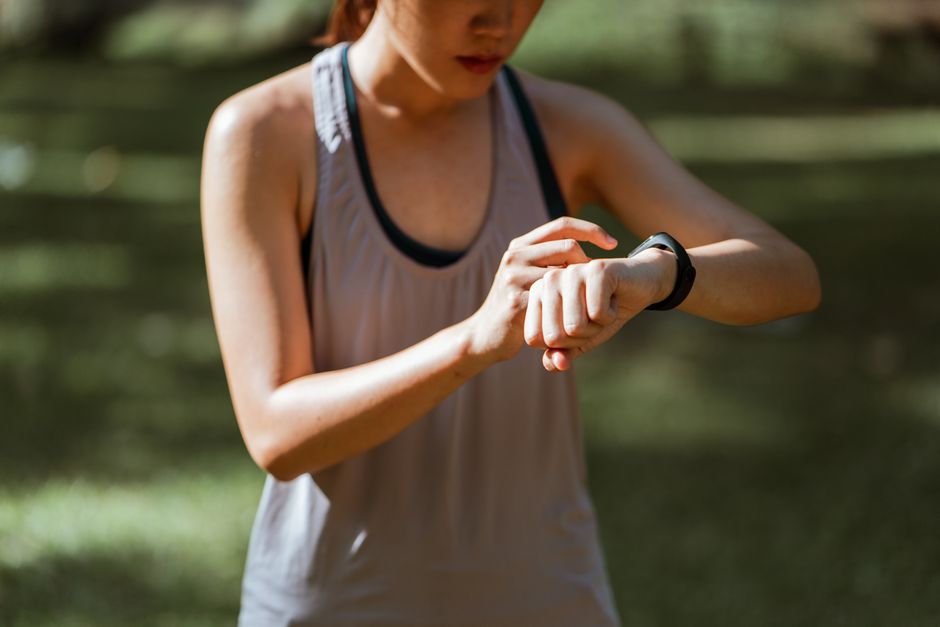
Wrist injuries are among the most common in skateboarding, and the American Academy of Orthopaedic Surgeons recommends wrist guards, especially for kids and teens. A watch doesn’t fit well under a wrist guard, and a hard fall can crack a screen or press the watch into your wrist. That’s why our top pick for the session itself is an armband, and why many skaters wear their watch or ring for everyday life and sleep and take it off to skate. Read more on skateboarding injuries.
The best skateboarding wearables
1. Polar Verity Sense: best for skating
An optical heart-rate sensor on a soft armband, worn on the upper arm, so your wrists stay free for guards and falls. Polar lists up to 30 hours of battery, water resistance to 50 m, 600 hours of internal memory (so you can leave the phone in the bag and sync later), and dual Bluetooth plus ANT+ to pair with phones, watches and apps. Polar’s price is $104.95. A heart-rate trace shows how hard a three-hour session really was and how fast you recover between runs.
- Good: nothing on the wrist; stores data without a phone; comfortable for long sessions.
- Watch out: no screen; it’s a sensor, not a tracker of tricks; arm pads may need to sit around it.
- Best for: skaters who want heart-rate data during sessions and contest training.
Check the Polar Verity Sense price on Amazon
2. Polar H10: most accurate heart rate
A chest strap that reads the heart’s electrical signal. A systematic review found chest-strap (ECG) sensors more accurate than optical sensors on the wrist, especially during hard efforts. Polar lists up to 400 hours on a coin battery and both Bluetooth and ANT+, at $104.95. Use it for off-board conditioning, interval work and anything where accuracy matters. Compare more options in our best heart rate monitors guide.
- Good: accurate; huge battery life; works with almost any app.
- Watch out: a strap around the chest isn’t everyone’s idea of comfort during a long session.
- Best for: gym conditioning and skaters who want the most accurate numbers.
Check the Polar H10 price on Amazon
3. Apple Watch SE 3: best for skating alone
For a skater who often rides alone, at a DIY spot, cruising long distances or skating home at night, the safety features may matter more than any fitness number. Apple says Fall Detection can sound an alarm and, if you’re unresponsive for about a minute, start a countdown and call emergency services, then message your emergency contacts with your location. Apple is also clear that the watch can’t detect all falls, and that high-impact activity can trigger it, so expect the odd false alert at the park. Apple lists the SE 3 from $229, with up to 18 hours of battery; it needs an iPhone.
- Good: Fall Detection and Emergency SOS; full smartwatch; good price for an Apple Watch.
- Watch out: on the wrist where you fall; daily charging; false alerts possible during hard slams.
- Best for: iPhone users who skate alone or commute on a board.
Check the Apple Watch SE 3 price on Amazon
4. Garmin vívoactive 6: best battery life
A health and fitness smartwatch with up to 11 days of battery (Garmin’s figure), sleep tracking with Sleep Coach, heart-rate variability (HRV) and 80+ sports apps, at $299.99. It works with both iPhone and Android. Garmin’s incident detection works only during certain outdoor activities, needs your phone, and texts your contacts rather than calling emergency services, so it’s not a full replacement for Apple’s Fall Detection.
- Good: long battery; strong sleep and recovery data; works with Android.
- Watch out: no dedicated skateboarding trick tracking; limited incident detection.
- Best for: skaters who also run, ride or lift and want one watch for everything.
Check the Garmin vívoactive 6 price on Amazon
5. Oura Ring 5 and WHOOP: best recovery trackers
Recovery trackers watch what happens off the board: sleep, resting heart rate and HRV, turned into a daily score. The Oura Ring 5 starts at about $399 plus a $5.99 monthly membership and lasts 6 to 9 days. Wear it to bed; take it off before you skate, because hands hit the ground. WHOOP is a screenless band sold as a membership (from about $199 a year; about $239 for the Peak tier) with 14+ days of battery. Both help you spot when a run of big sessions is catching up with you. Neither is a medical device. See our WHOOP vs Oura vs Garmin comparison and HRV for athletes.
Check the Oura Ring 5 price on Amazon
6. Spinnax FREAK: the one that tracks tricks
The rare skate-specific device: a small motion sensor that goes on the board and an app (iOS and Android) that records sessions and tricks, shows 3D replays and runs remote challenges and games of S.K.A.T.E. The German maker sells it as a subscription that includes the sensor (€9.90 a month on a 12-month plan or €99.90 a year) or a €159 lifetime license. Be realistic about the data: a 2026 study of 23 skaters found it detected trick events and measured rolling distance well, but trick classification, top speed, board height and airtime had substantial errors. Fun for progress and games; not a lab.
See the Spinnax FREAK at Spinnax
How to choose a wearable for skateboarding
- Decide what you want to know. Effort during sessions: a heart-rate sensor. Safety when alone: a watch with fall detection. Sleep and readiness: a ring or band. Tricks: a board sensor.
- Protect your wrists first. Wrist guards matter more than wrist data. Armbands and chest straps avoid the conflict.
- Add up the real cost. One-time purchases versus memberships (WHOOP, Oura, Spinnax).
- Check your phone. Apple Watch needs an iPhone; most others work with both.
- Numbers aren’t everything. No tracker can tell you a wrist is broken. If something hurts, see a sports medicine doctor, physical therapist or athletic trainer.
Back to the skateboarding hub, or see skateboarding training and recovery. Protective gear is in our skateboarding gear guide. Team-sport athletes can compare GPS vests in GPS trackers for team sports and on the soccer wearables page. Browse all wearables.
Skateboarding wearable questions
Is there a fitness tracker made for skateboarding?
Very few. The Spinnax FREAK is a board-mounted sensor that tracks sessions and tricks, though a validation study found some of its measurements (like trick classification and airtime) still have large errors. Most skaters use general heart-rate sensors, watches or recovery trackers.
Should I wear a smartwatch while skateboarding?
You can, but think about your wrists: a watch doesn’t fit well under a wrist guard and can be damaged in a fall. An armband heart-rate sensor avoids that. If you skate alone, a watch with fall detection is a reasonable trade-off.
Will Apple Watch fall detection go off when I bail?
It might. Apple says high-impact activity can trigger Fall Detection, and that it can’t detect every fall. When an alert comes up, you can tap “I’m OK” to dismiss it.
What heart rate is normal during a skate session?
It varies a lot by person, age and what you’re skating: short spikes during runs and drops while you rest. The useful thing is your own trend over time. A heart rate that stays unusually high, or chest pain, dizziness or fainting, is a reason to stop and see a doctor.
Are recovery trackers worth it for skaters?
For skaters who skate most days or train for contests, sleep and HRV trends can show when to take an easier day. For casual skaters, regular sleep and rest days do the same job for free.