This article contains affiliate links: if you buy through them we may earn a commission, at no extra cost to you. Learn more.
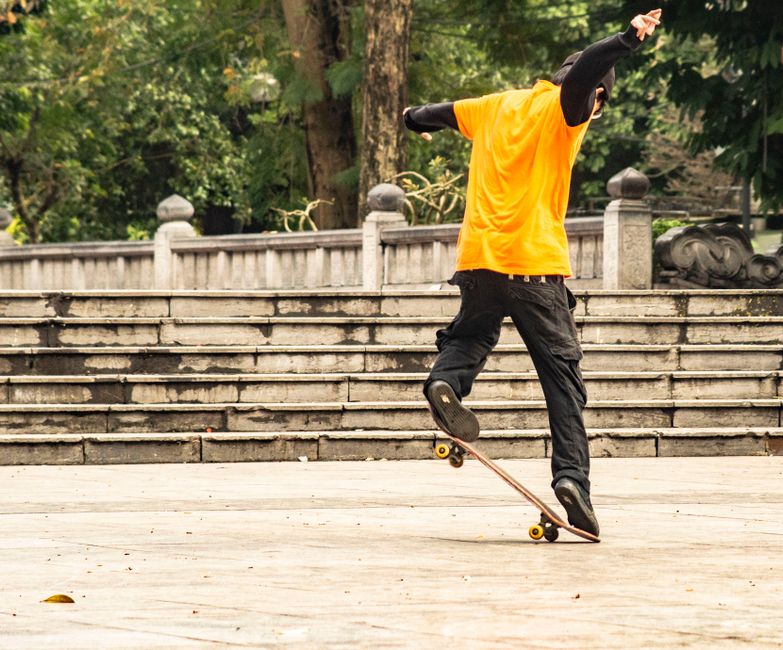
Late afternoon at the local park. A twelve-year-old has been trying the same kickflip for an hour. On the next attempt the board shoots out, he goes down backward and throws a hand out to catch himself. He gets up holding his wrist and says it’s fine. His friends aren’t so sure. Every skater knows this moment, from kids on their first board to the pros in an Olympic final: falling is part of skateboarding. What matters is how you fall, what you wear, and knowing when “it’s fine” really means “get it checked”. This page covers the common skateboarding injuries, what the research says about helmets and wrist guards, how to learn to fall, and when to see a professional.
This page is general information, not medical advice. If you’re hurt, see a sports medicine doctor, physical therapist (PT) or certified athletic trainer (AT). For the bigger picture of the sport, start at our skateboarding hub.
How often skaters get hurt
The American Academy of Orthopaedic Surgeons (AAOS) puts skateboarding injuries at about 70,000 emergency department visits a year in the US, with about half of them in children under 15, mostly boys. In its position statement with the Pediatric Orthopaedic Society of North America, AAOS adds that wrist and ankle fractures are the most common skateboarding injuries, followed by head injuries, and that most hospital stays involve a head injury.
Put in perspective, skateboarding isn’t the most dangerous sport around. A US study that compared injuries to the number of people taking part found 8.9 emergency-treated skateboarding injuries per 1,000 participants in 1998: about twice the rate for in-line skating, but less than half the rate for basketball. The same study found that the injuries serious enough for a hospital stay were 11 times more likely to involve a crash with a car. Traffic, not the skatepark, is where the worst injuries tend to happen.
The most common skateboarding injuries
Wrist fractures
The classic skate injury. AAOS explains that many happen when a skater loses balance and lands on an outstretched arm. In a 10-year review of 5,026 skateboarding injuries at Gold Coast hospitals in Australia (average age 19), 44% of injuries were fractures, and the wrist and hand made up 57% of all upper-limb injuries. Signs that a wrist may be broken: pain that doesn’t settle, swelling, a bump or bend that wasn’t there before, or pain when you grip or turn your hand. A wrist that is still sore and swollen the next day deserves an X-ray. Some wrist fractures, like the scaphoid (a small bone at the base of the thumb), can look like a sprain at first.
Ankle sprains and fractures
Landing half on the board or rolling onto a pebble: rolled ankles are everywhere in skating. In the US participation study, ankle sprains and strains were the single most frequent injury, and in the Gold Coast data, ankle injuries made up 45% of lower-limb injuries. AAOS describes a sprain as ligaments stretched past their limit; expect pain, swelling, bruising and an ankle that feels like it “gives out”. The National Athletic Trainers’ Association (NATA) says the most consistent risk factor for a sprain is a previous sprain, so the first one deserves real rehab. If you can’t put weight on it, or it might be broken, see a doctor.
Head and face injuries
A study of US emergency department data from 2009 to 2018 estimated about 100,000 visits for skateboarding injuries to the head and face. The average patient was 16 and almost 86% were male. Most (77%) simply fell off the board while riding; 7% were hit by a motor vehicle. At one US trauma center, three in four skaters aged 15 and older who were admitted to hospital had a head injury, and most of the impacts were to the back of the head: the board shoots forward, the skater falls backward.
Scrapes, bruises and “board to the shin”
Road rash, bruised hips and shinners are daily life. AAOS notes that knee and elbow pads reduce the severity of cuts and scrapes. For cleaning a scrape, the American Academy of Dermatology suggests washing gently with mild soap and water, keeping it moist with petroleum jelly and covering it with a bandage changed daily. See a doctor for deep wounds, grit you can’t clean out, or signs of infection.
Helmets: what the research shows
Helmet use in skateboarding is low. In a CDC analysis of middle school students in selected states, 74.6% said they rarely or never wore a helmet while skateboarding or rollerblading. In a US trauma database of 24,903 injured skaters from 2007 to 2016, only about 5% had worn one. That same study found helmet use was linked to about half the odds of a severe traumatic brain injury, and injuries at skateparks were also linked to lower odds than injuries elsewhere.
AAOS says to wear a properly fitting helmet “no matter what your age, level of experience, or skateboarding arena”. A good fit, per AAOS: worn flat on the head and low on the forehead, side straps forming a “V” under each ear, a buckle snug enough that only two fingers fit under the chin, and no movement when you shake your head. Replace it when it’s damaged, when you outgrow it, or at least every 5 years. Look for CPSC (bike) and/or ASTM F1492 (skateboard) certification. At the elite level, World Skate’s 2025 competition rules require helmets for all park skaters and for street skaters under 18, in practice and competition.
Wrist guards and pads
AAOS says wrist guards help support the wrist and reduce the chances of breaking a bone in a fall, and recommends them, with knee and elbow pads, for all children and teens. Honest note: we didn’t find a large study of wrist guards in skateboarders specifically. The best evidence comes from similar sports. In a classic study of injured in-line skaters, those who didn’t wear wrist guards had about 10 times the odds of a wrist injury. A systematic review in snowboarders found wrist guards cut the risk of wrist injury by roughly three-quarters.
Many skaters keep a simple kit in the bag: a dual-certified helmet like the Triple Eight Dual Certified helmet, Triple Eight Wristsavers, and for bowl and ramp skating, hard-cap knee pads like the 187 Killer Pads Pro. After a sprain, a lace-up brace like the ASO EVO is common; ask your PT or athletic trainer first. Gear lowers the odds; it doesn’t make you unbreakable. More in our skateboarding gear guide.
Triple Eight Dual Certified Helmet
- CPSC bike + ASTM F1492
- EPS liner, adjustable fit
- About $46
Triple Eight Saver Series Wristsavers
- Splints on top and bottom
- 3 adjustable straps
- Sizes JR to L, about $30
187 Killer Pads Pro Knee Pads
- Removable hard cap
- Dual-density foam
- Sizes Junior to XL
ASO EVO Ankle Stabilizer
- Lace-up with figure-8 straps
- Fits left or right foot
- Low profile, fits in shoes
Learning to fall
Good skaters fall all the time; they just fall well. When researchers watched videos of pro contests, they saw lots of falls but also a real ability to control them and keep the head off the ground. AAOS’s advice on falling:
- Get low. If you’re losing your balance, crouch so you don’t have as far to fall.
- Land on the fleshy parts of your body (side of the thigh, backside, shoulder) rather than your hands and arms.
- Roll with the fall so your hands, wrists and arms don’t take all the force.
- Relax instead of going stiff.
Practice on grass or a mat before you need it; in a bowl, learn to knee-slide on pads. Our skateboarding training page has more on progressions.
Prevention: the short list
- Learn the basics first. AAOS: master stopping, slowing down and turning before tricks, and practice tricks and jumps in a controlled place such as a supervised skatepark.
- Stay out of traffic. Never hold onto a moving vehicle (“skitching”), avoid crowded walkways and skating in the dark, and skip wet days.
- Check the spot and the board. Look for cracks, rocks and debris; check for loose trucks, cracked decks and chipped wheels before every session. No homemade ramps.
- Young kids: AAOS doesn’t recommend skateboarding for children under 5; ages 6 to 10 should have an adult watching. More on our youth skateboarding page.
- Train the body. Balance work helps ankles: NATA recommends a balance program of at least 3 months for athletes who’ve sprained an ankle.
Concussion: recognize it and stop skating
Any hard fall, especially backward onto the head, can cause a concussion, helmet or not. The CDC’s HEADS UP program says: if you think someone has a concussion, they stop for the day and don’t return until a health care provider clears them. Signs to watch (CDC): looking dazed, slow to answer, clumsy, confused, mood changes, vomiting. Symptoms: headache, dizziness, nausea, blurry vision, sensitivity to light or noise, feeling foggy.
Call 911 or go to the emergency department for the CDC’s danger signs: one pupil larger than the other, a headache that gets worse and won’t go away, slurred speech, weakness or numbness, repeated vomiting, seizures, growing confusion, or passing out. At World Skate events, a skater with a suspected concussion must be removed and can’t return for 14 days, and only after a doctor clears them.
When to see a sports medicine doctor, PT or athletic trainer
- Right away (emergency): any concussion danger sign, a bone that looks bent or out of place, a crash with a car, numbness, or a deep wound.
- Within a day or two: a wrist or ankle that stays swollen or sore, you can’t bear weight or grip, or a suspected concussion.
- Soon: pain that keeps coming back, an ankle that keeps rolling, or a child who limps or protects an arm.
A sports medicine physician diagnoses; a physical therapist guides rehab and the return to the board. For first aid while you wait, AAOS lists rest, ice, compression and elevation for sprains. Then let a professional plan the comeback, and look after the basics on our skateboarding recovery page. Compare soccer injuries for more on ankles and concussion.
Skateboarding injuries: FAQs
What is the most common skateboarding injury?
Wrist and ankle injuries. AAOS says wrist and ankle fractures are the most common skateboarding injuries, followed by head injuries. Ankle sprains and wrist fractures topped the list in a US study of emergency visits.
Do wrist guards really help skateboarders?
AAOS says they help support the wrist and reduce the chance of breaking a bone in a fall. The strongest studies come from in-line skating and snowboarding, where wrist guards were linked to far fewer wrist injuries. We didn’t find an equally large study in skateboarders.
Why don’t pro skaters always wear helmets?
Culture and choice, mostly. World Skate requires helmets for all park skaters and street skaters under 18, but adult street skaters may choose. Research on injured skaters links helmets to about half the odds of a severe brain injury, so we recommend one for everyone.
What age is safe to start skateboarding?
AAOS and POSNA don’t recommend skateboarding for children under 5, and say children 6 to 10 should be supervised by an adult. All kids and teens should wear a helmet, wrist guards and knee and elbow pads.
How do I know if my wrist is broken or sprained?
You often can’t tell without an X-ray. Swelling, a bump, pain when you grip, or pain that’s still there the next day are reasons to see a doctor. Some breaks, like a scaphoid fracture near the thumb, can feel like a sprain at first.
Is a skatepark safer than the street?
For serious injuries, the research points that way: hospital stays were 11 times more likely to involve a car in one US study, and skatepark injuries were linked to lower odds of severe brain injury. AAOS recommends a supervised skatepark.