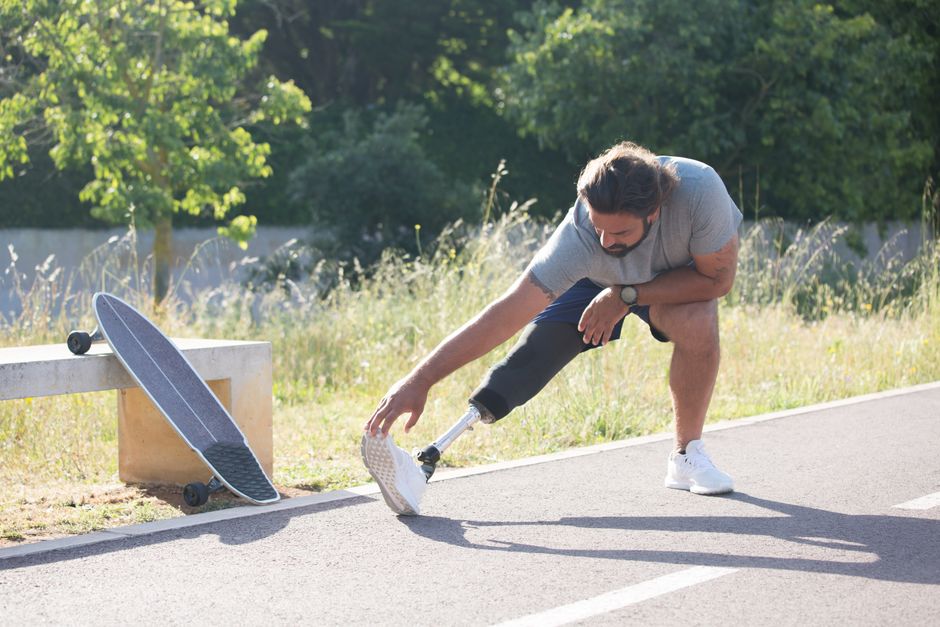
This article contains affiliate links: if you buy through them we may earn a commission, at no extra cost to you. Learn more.
The sun’s going down, the park lights flicker on, and you finally land it. Twenty minutes later, sitting on the curb with your shoes off, it all arrives at once: burning calves, a bruised hip from the third slam, palms stinging from the ground, a heel that feels every step. The next morning, stairs are a project. Skateboarding is hard on the body in its own way: hundreds of pops and landings, lots of small falls, and sessions that run for hours. This page covers recovery for skateboarders: what to do in the first hour, how to eat and sleep, how to handle bruises and sore legs, which recovery tools have some evidence, and when “sore” means “see someone”.
General information, not medical advice. Pain that’s sharp, swollen or getting worse needs a sports medicine doctor, physical therapist or athletic trainer. Back to the skateboarding hub.
The first hour after a session
- Cool down if you like it. A 2018 review in Sports Medicine found an active cool-down does little for next-day performance or soreness, though it may help heart rate and breathing settle. A few easy pushes home and some light stretching are fine; just don’t count on them as your recovery plan.
- Check yourself over. Clean scrapes with mild soap and water, keep them moist with petroleum jelly and covered, as the American Academy of Dermatology suggests. Look honestly at any wrist or ankle that’s swelling.
- Eat and drink. See below. A long session burns more than most skaters think.
- Get out of your skate shoes. Many skaters switch into a cushioned slide like the OOFOS OOahh after hours of landings; it’s about comfort, not treatment. See our best recovery shoes guide.
Refuel and rehydrate
The ACSM, Academy of Nutrition and Dietetics and Dietitians of Canada joint position statement gives athletes a simple frame. When you need to recover quickly (for example, skating again tomorrow or a second contest round), start eating carbohydrate soon after and keep it coming over the next few hours (about 1.0–1.2 g per kg of body weight per hour for the first 4 hours). Add 15–25 grams of protein (or 0.25–0.3 g/kg) within the first two hours to support muscle repair. To rehydrate, drink about 125–150% of the fluid you lost: if you weigh 1 kg less after a session, that’s 1.25–1.5 liters over the next few hours.
Real food works: a burrito, a rice bowl with chicken, chocolate milk and a sandwich, Greek yogurt with fruit. A protein shake is convenient, not essential. The same statement discourages heavy drinking after exercise; for teens, that question shouldn’t come up at all. More on everyday eating on our skateboarding nutrition page.
Sleep: the best recovery tool you already own
Sleep is where your body does most of its repair. The American Academy of Sleep Medicine (AASM), with the American Academy of Pediatrics, recommends 9–12 hours a night for ages 6–12 and 8–10 hours for teens 13–18; adults need 7 hours or more. Research on soccer players found night games, late caffeine, screens near bedtime and irregular wake times all get in the way of sleep, and the same habits show up after late sessions under the park lights. Wind down, keep the phone away from the pillow, and try to wake at a similar time each day. Tracking sleep? See our best sleep trackers guide.
Bruises, sore legs and “slam days”
Muscle soreness that peaks a day or two after a big session, mostly in calves, quads and glutes, is normal. Bruises from falls usually fade over a week or two. For sprains and strains, AAOS lists rest, ice, compression and elevation as first aid. What’s not normal and needs a professional: a wrist that still hurts to grip the next day (the American Academy of Orthopaedic Surgeons warns some wrist fractures feel like a sprain), an ankle you can’t walk on, pain at one spot on a bone, swelling that keeps growing, or any headache, dizziness or fogginess after a fall. Our skateboarding injuries page has the warning signs.
Rest days and easy days
Skating every day is tempting. The American Academy of Pediatrics recommends that young athletes take at least 1–2 days off a week from their main sport. For adults, a rest day or a cruise-only day after a heavy session lets bruises settle and legs come back. An easy day can still include skating: flat-ground practice, cruising, filming friends. Ideas in our active recovery day ideas.
Recovery tools: what the research says
- Massage and foam rolling: a 2018 analysis of 99 studies found massage was the most effective method for reducing muscle soreness and feelings of fatigue. Foam rollers like the TriggerPoint GRID and massage guns like the Theragun Mini are the do-it-yourself version; a 2026 review of 12 trials found percussion devices helped jump performance recover, but showed no clear benefit for strength or soreness. Avoid rolling or “gunning” fresh bruises.
- Cold water: a 2016 meta-analysis found cold-water immersion slightly better than passive rest for soreness, with the best results at 10–15 °C (50–59 °F) for 10–15 minutes. But a 2015 study found regular ice baths after strength training led to smaller strength gains, so skip them after leg-day workouts. Cold plunges aren’t for everyone: check with a doctor if you have a heart condition, high blood pressure, Raynaud’s or are pregnant, never plunge alone, and keep kids to cool showers.
- Compression: a meta-analysis found small benefits from compression garments, mostly for strength recovery. Pneumatic boots are a different tool with less research.
None of these replaces sleep and food. Compare tools in our best massage guns and best recovery tools guides.
OOFOS OOahh Slide
- OOfoam slide
- APMA Seal of Acceptance
- Machine washable
Theragun Mini (3rd Gen)
- 3 speeds, 3 attachments
- Bluetooth app
- About $220
TriggerPoint GRID 1.0
- 13 in, hollow core
- Multi-density surface
- About $40
Contest weekends and skate trips
- Eat a real meal within an hour or two of finishing each day, and pack snacks for travel.
- Weigh yourself before and after a hot session to see how much fluid to replace.
- Don’t let practice before a contest turn into a full session; save your legs.
- Protect sleep on the road: a regular bedtime beats one more late session.
For the day itself, see session and contest day; for building a body that recovers faster, see skateboarding training. Other sports handle this differently; compare soccer recovery.
Skateboarding recovery: FAQs
Why are my legs so sore after skateboarding?
Pushing, popping and absorbing landings work the calves, quads and glutes hard, often for hours. Soreness that peaks a day or two later and fades is normal. Sharp pain in one spot, swelling or pain that gets worse is not, and needs a professional.
Is it OK to skate every day?
Many skaters do, but the American Academy of Pediatrics recommends young athletes take at least 1–2 days off a week from their main sport. Mixing hard days with easy cruising days and getting enough sleep helps adults too.
What should I eat after a skate session?
A meal with carbohydrate and 15–25 grams of protein within a couple of hours, plus fluids to replace sweat: a burrito, a rice bowl, a sandwich and chocolate milk. If you’re skating again soon, keep the carbs coming over the next few hours.
Should I ice a bruise from a fall?
AAOS lists rest, ice, compression and elevation as first aid for sprains and strains, and many skaters use the same simple care for bruises. If a bruise sits over a joint that won’t move well, or you can’t bear weight or grip, get it checked; it may be more than a bruise.
Do massage guns help skaters recover?
Many skaters like them for tight calves and quads. Research reviews suggest massage helps soreness and that percussion devices may help jump performance recover, with mixed results for strength. Use them on muscles, not on fresh bruises or injuries.