This article contains affiliate links: if you buy through them we may earn a commission, at no extra cost to you. Learn more.
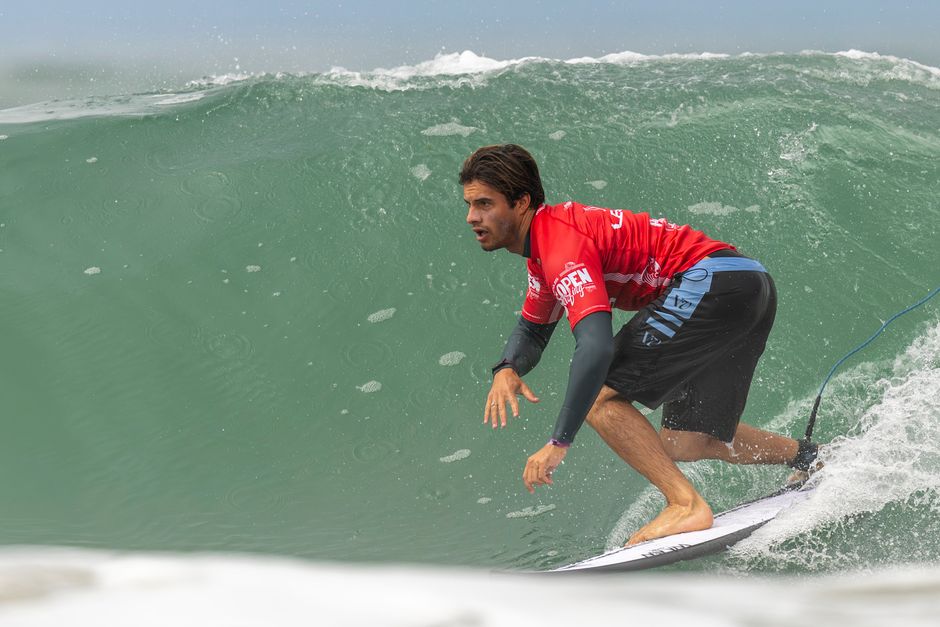
A June morning in Huntington Beach: jersey colors on the sand, a heat horn, parents with coolers and kids from Florida, Hawaii and California waiting for their turn at the NSSA Nationals. Six months later and an ocean away, the world’s best surfers paddle out at Pipeline for a world title. Between those two scenes sits a whole ladder of surfing organizations: amateur associations, a national governing body, a world federation, pro tours and, since Tokyo 2020, the Olympics. Here’s who runs what, and how a surfer moves up.
For the big picture of the sport, start at our surfing hub.
Who’s who in surfing
| Organization | What it does |
|---|---|
| ISA (International Surfing Association) | World governing body for surfing and other wave riding, recognized by the IOC; runs world championships and Olympic surfing. |
| USA Surfing | US national governing body; picks Olympic and international US teams; runs the USA Surfing Championships and Prime series. |
| World Surf League (WSL) | Pro surfing: the Championship Tour, Challenger Series, Qualifying Series, Junior Tour and Longboard Tour. |
| NSSA | Scholastic surfing: youth contests, middle school, high school and college team seasons, National Championships. |
| Regional associations | Western Surfing Association, Hawaiian Surfing Association, Eastern Surfing Association and Texas Gulf Surfing Association run amateur contests in their regions. |
ISA: the world governing body
The International Surfing Association was founded in 1964, is based in San Diego and describes itself as the world governing authority for surfing, SUP racing and SUP surfing, para surfing, bodyboarding and other wave riding. The International Olympic Committee gave it provisional recognition in 1995 and confirmed it in 1997. It has more than 100 member federations.
Its world events include the ISA World Surfing Games (national teams, and a route to the Olympics), the World Junior Surfing Championship, the World Adaptive (para) Surfing Championship, and world championships for longboard, SUP and paddleboard, bodyboard, masters and kneeboard. For many surfers, wearing the national jersey at an ISA event is the high point of an amateur career.
USA Surfing and the regional associations
USA Surfing is the national governing body in the United States, recognized by the ISA. It covers shortboard, longboard, stand-up paddle, adaptive (para) surfing and bodyboarding. It runs the annual USA Surfing Championships (held in Oceanside, California, in June 2026, alongside team trials), the regional Prime series on the East and West Coasts, and picks the US teams for ISA world championships, the Pan American Games and the Olympics. On April 15, 2026 the US Olympic and Paralympic Committee certified it as the national governing body for Olympic and Paralympic surfing again, effective June 1, 2026, ahead of LA28.
Five regional groups are its member associations, and most US contest surfers start in one of them: the Western Surfing Association, the National Scholastic Surfing Association, the Hawaiian Surfing Association, the Eastern Surfing Association and the Texas Gulf Surfing Association. Their contests run all year, with age divisions from small kids to masters.
NSSA: scholastic and college surfing
The National Scholastic Surfing Association was founded in Huntington Beach in 1978 and is often called the “little league of surfing.” Its idea is that athletics and scholastics go hand in hand: it’s one of the few national youth sports organizations that requires its competitors to keep up academic standards. It runs more than 80 events a year across conferences on the West Coast, in Hawaii and on the East Coast.
- Open season: the top level, for students only. Divisions: Men’s (16 and up), Juniors (13 to 15), Boys (12 and under), Mini Groms (10 and under), Women’s and Longboard.
- Explorer season: beginner to advanced and non-students, from Menehuene (12 and under) to Masters, Seniors, Super Seniors and Duke (55 and up), plus Women’s and Longboard.
- Team seasons: middle school, high school and college surf teams.
- JR Program: a novice program for grades 6 to 11.
The season ends with the NSSA National Championships each June in California, regarded as the highest-profile youth surfing event in America.
College surf clubs
Surfing isn’t an NCAA championship sport, so there are no NCAA surfing scholarships or national NCAA title. College surfing runs through club teams, which compete in the NSSA’s collegiate team season and contests. For example, the University of North Florida’s surf team qualified for the NSSA National Championships in Huntington Beach in June 2025. If you want to surf in college, ask the school’s club sports office whether it has a surf club and which contests it enters. Strong surfers also keep competing as individuals in the regional associations and WSL Qualifying Series events.
World Surf League: the pro tours
The WSL, based in Santa Monica, traces its roots to the International Professional Surfers (1976) and the Association of Surfing Professionals (1983), which became the WSL in 2015. In 2018 it announced equal prize money for men and women at its events. The ladder looks like this:
- Qualifying Series (QS): regional events where surfers earn points.
- Challenger Series: the step between the regional QS and the elite tour.
- Championship Tour (CT): the elite tour. As of the 2026 season it has 12 events, from Bells Beach (April 1 to 11) to the Pipe Masters in Hawaii (December 8 to 20), with stops such as Margaret River, Snapper Rocks, Jeffreys Bay, Teahupo’o, Cloudbreak, Lower Trestles, Surf Abu Dhabi and Peniche. The first nine stops have 36 men and 24 women; after stop 9 the field is cut to 24 men and 16 women for two postseason events, and the full fields return for the Pipe Masters finale, worth 1.5 times a regular event. World titles go to a surfer’s best nine of 12 results.
- Junior Tour, Longboard Tour and big-wave events for specialists.
Formats change often, so check the WSL’s current rules before you plan a season around them. Our surfing rules page explains how heats are judged.
Surfing at the Olympics
Surfing debuted at Tokyo 2020, with 20 men and 20 women at Tsurigasaki Beach; Italo Ferreira of Brazil and Carissa Moore of the US won the first golds. At Paris 2024 the contest went to the heavy reef at Teahupo’o in Tahiti, about 15,000 km from Paris, with 48 surfers. Kauli Vaast of France and Caroline Marks of the US won gold, so US women have won both Olympic surfing titles so far.
For LA28, the IOC and ISA approved the qualification system in February 2026: 48 surfers (24 men and 24 women), a maximum of three per gender per country, competing at Lower Trestles in San Clemente, part of San Onofre State Beach. The contest is scheduled for July 15 to 18, 2028, with backup days to July 23. Trestles is one of California’s best-known waves and gets about 2.5 million visitors a year, according to California State Parks.
Kit for contest days
Prices change often. The prices below are what we saw at the maker or a major retailer in October 2026; check the current price before you buy.
Contest days mean long hours on the beach and short, intense heats. A practical contest bag for cool water: an entry-level suit such as the O’Neill Reactor-2 3/2 mm (about $145 to $160 depending on size), ear plugs like SurfEars 4.0 (about $70) for cold mornings, and an electrolyte tab such as Nuun Sport (300 mg sodium per tablet; Informed Choice listed) in a bottle on the beach. More in our surfing gear page, session and contest day page and best electrolyte powder guide.
O'Neill Reactor-2 3/2 mm Back Zip Wetsuit
- 3/2 mm full suit
- Back zip
- Ultra stretch neoprene
SurfEars 4.0
- Keeps water out, lets sound in
- 4 tip sizes
- Storage case
Nuun Sport
- 300 mg sodium per tablet
- 1 g sugar
- Informed Choice listed
Back to the surfing hub, or see surfing rules, youth surfing and surf training. For how a team sport is organized, see soccer leagues and associations.
Surfing organizations questions
What is the governing body for surfing?
Worldwide, the International Surfing Association (ISA), recognized by the IOC. In the US, USA Surfing is the national governing body. The World Surf League runs professional surfing.
What is the difference between the WSL and the ISA?
The WSL is the pro league, with its own tours and world titles. The ISA is the world federation of national surfing bodies; it runs national-team world championships and Olympic surfing.
Is surfing an NCAA sport?
No. Surfing isn’t on the NCAA’s list of championship sports. College surfers compete as club teams, many through the NSSA’s college team season.
What is the NSSA?
The National Scholastic Surfing Association, founded in 1978: youth, school and college surf contests with academic standards, ending with National Championships each June in California.
How many surfers compete at the Olympics?
At Paris 2024 and LA28, 48: 24 men and 24 women, with at most three per gender from any one country. Tokyo 2020 had 40.