This article contains affiliate links: if you buy through them we may earn a commission, at no extra cost to you. Learn more.
Every swim family knows the mesh bag. It lives by the door, smells faintly of chlorine and holds a kickboard, a pull buoy, fins, two pairs of goggles (one with a broken strap), three caps and a towel that never quite dries. Swimming needs less equipment than most sports, but the right swimming gear makes practice better and keeps you inside the rules on race day. This swim gear list covers suits (including the tech suit rules for age-groupers), goggles, caps, the training tools coaches ask for, ear plugs, open water basics and the recovery gear worth packing.
Buying guide · Our Swimming buying guide compares the gear we'd pick, with prices and sizing:
Prices change often. The prices below are what we saw at the maker or a major retailer in October 2026; check the current price before you buy.
What the rules allow
World Aquatics rules ban any device or suit that helps speed, buoyancy or endurance in a race. That includes fins, paddles, webbed gloves and body tape (unless approved). Goggles are allowed. Racing suits must be World Aquatics-approved. For men they can’t go above the navel or below the knee; for women they can’t cover the neck, go past the shoulders or go below the knee. The fabric must be textile and let water through, with no zips. In the US, USA Swimming adds a tech suit rule for swimmers 12 and under (below). Training tools are for practice only.
Our top picks
Speedo Vanquisher 3.0 Goggles
- Anti-fog, low profile
- Interchangeable nosepieces
- Low-profile fit
Speedo Team Kickboard
- Textured EVA foam
- Finger scallops and grooves
- Adult 19.1 x 11.9 in
FINIS Long Floating Fins
- Soft natural rubber
- Floating blade
- Junior to adult sizes
FINIS Agility Floating Paddles
- Strapless
- Floating material
- Sizes XS to L
FINIS Original Swimmer's Snorkel
- Center-mount
- Adjustable fit
- Purge valve
Mack's AquaBlock Swimming Earplugs
- Soft silicone, triple flange
- Reusable
- Carry case
Swimsuits: practice suits and tech suits
Practice suits take a beating from chlorine, so most swimmers buy durable training suits and replace them when they go thin. Fit matters more than brand: a suit should stay put through dives and flip turns. Many teams order a team suit in their colors.
Tech suits are tight, high-performance racing suits, usually saved for championship meets. For 12-and-unders, USA Swimming has a clear rule: since September 1, 2020, they can’t wear tech suits at meets sanctioned, approved or observed by an LSC. The only exceptions are Junior Nationals, the US Open, National Championships and Olympic Trials. USA Swimming counts as a tech suit any suit with bonded or taped seams, or woven fabric past the hips. A knit suit with sewn seams that doesn’t go below the knee is allowed. Cost was one of the reasons: tech suits often run $300–600. Older swimmers should check that a racing suit is on World Aquatics’ approved list. We don’t push one suit, because fit and sizing are personal, and our youth swimming guide explains the age-group rules.
Goggles
Goggles should seal without being pulled painfully tight, so try a few styles. Mirrored lenses help outdoors and in bright pools, and clear lenses suit dim indoor pools. The Speedo Vanquisher 3.0 is the newest version of a long-running racing goggle: low profile and anti-fog, with optics Speedo says are 14% wider than the 2.0, cushioned silicone seals and interchangeable nosepieces, for about $25–32 at Speedo depending on color. For kids, the Vanquisher 2.0 Junior is made for ages 6–14. Keep a spare pair in the bag; straps break at the worst moment.
Check the Speedo Vanquisher 3.0 price on Amazon
Caps
A cap keeps hair out of your face and, together with ear plugs, is one of the ways the CDC suggests keeping water out of the ears. Silicone caps are latex-free and, Speedo says, don’t pull hair when you put them on or take them off. The Speedo Elastomeric Silicone Cap is a stretchy option that’s easy to pull on, and Speedo makes a junior size for kids. Open water swimmers should wear a brightly colored cap so they’re easy to see.
Training tools coaches ask for
- Kickboard: for kick sets. The Speedo Team Kickboard is textured EVA foam with finger scallops on the sides and grooves underneath for grip, 19.1 × 11.9 inches in adult size.
- Pull buoy: held between the legs so you can work the arms and body position. The Speedo pull buoy is soft EVA foam, about $17 on Amazon.
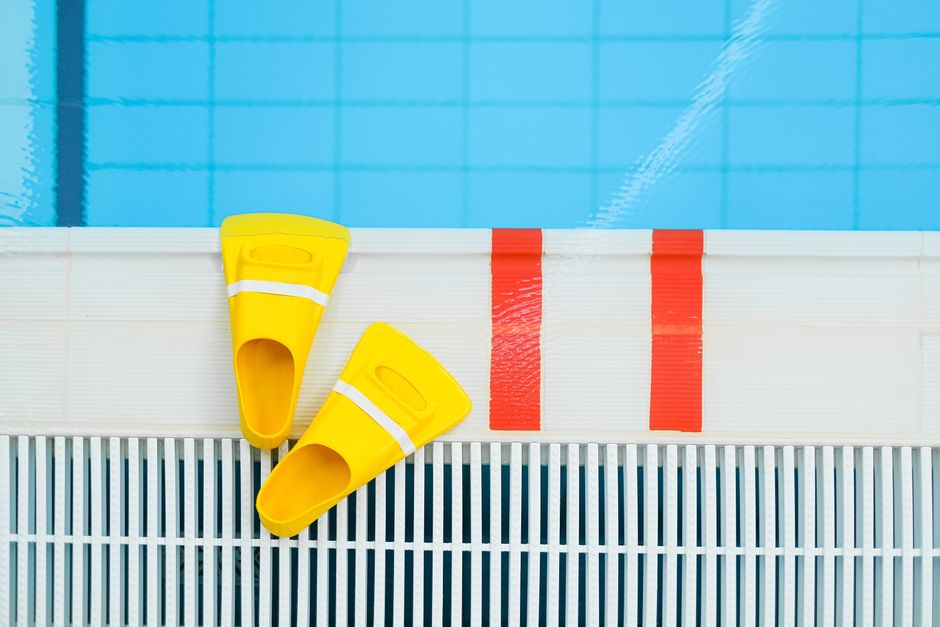
- Fins: for kick technique, speed work and body position. The FINIS Long Floating Fins are soft natural rubber with a long floating blade, sized from juniors to adult 13–14, for about $30–48 at FINIS depending on size.
- Paddles: for feel and strength. The strapless FINIS Agility Paddles slip off if your pull isn’t clean, which makes them good for technique. They float, come in XS to L by hand size, and cost about $26 at FINIS. Go easy with big paddles if your shoulders are sore.
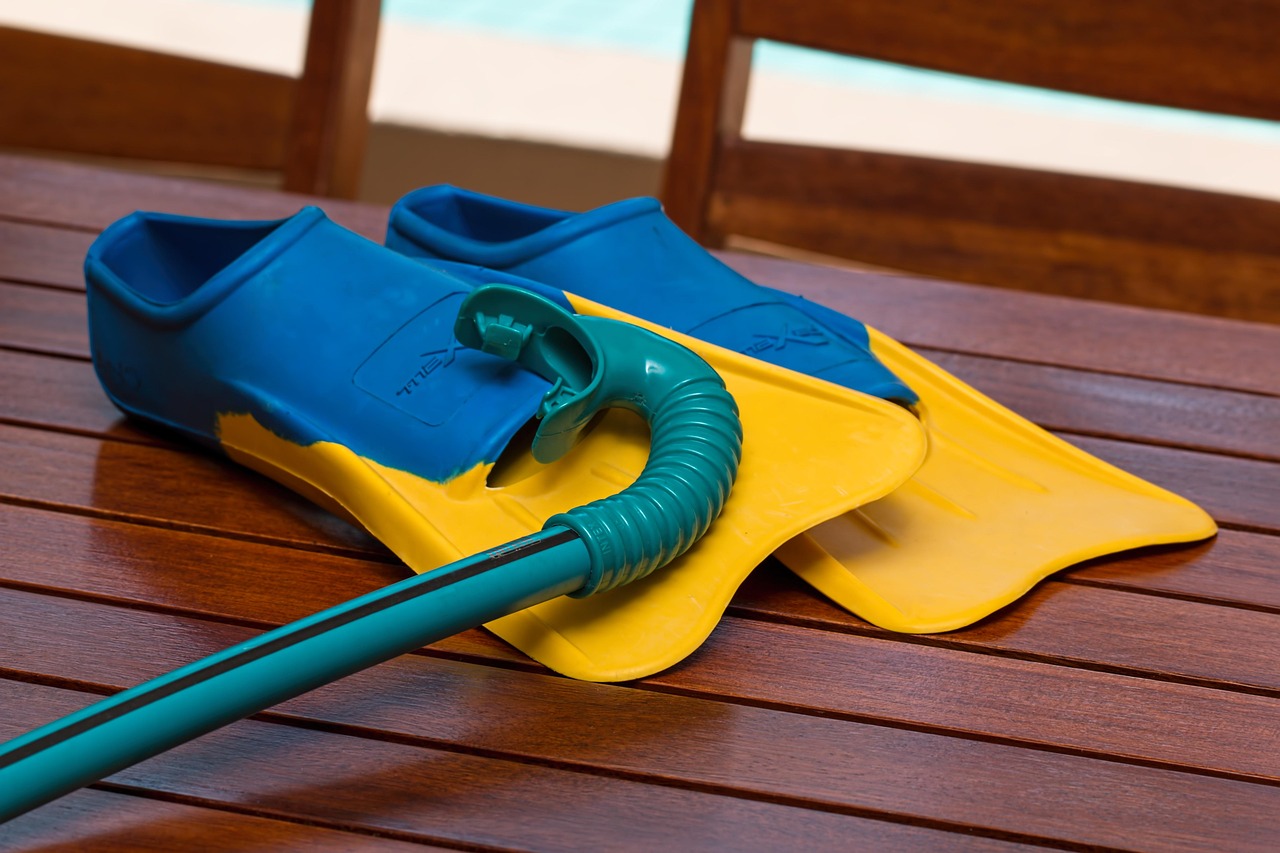
- Snorkel: a center-mount snorkel lets you work on your stroke without turning your head to breathe. The FINIS Original Swimmer’s Snorkel has an adjustable fit and a purge valve, for about $42–45 at FINIS.
Ask your coach which tools your group uses before buying, and how often. Our swimming training page explains how they fit into a workout.
Check the FINIS Long Floating Fins price on Amazon
Check the FINIS Swimmer's Snorkel price on Amazon
Ear plugs and ear care
Swimmer’s ear is an infection of the outer ear canal when water stays in it. The CDC suggests a cap, ear plugs or custom-fitted swim molds, tilting your head to drain each ear and towel-drying after swimming, and never putting cotton swabs or other objects in the ear canal. Mack’s AquaBlock plugs are soft, reusable, triple-flange silicone plugs that Mack’s says are the official ear plugs of USA Swimming, for about $5–7 at Mack’s. Ear pain or discharge is a reason to see a doctor. More on our swimming injuries page.
Check the Mack's AquaBlock price on Amazon
Open water gear
Open water adds a few things: a bright cap, goggles with tinted or mirrored lenses for sun and glare, and a wetsuit when the water is cold. World Aquatics requires wetsuits in its races below 18°C (about 64°F), while traditional marathon swims such as a ratified English Channel crossing don’t allow them. Check your race’s rules. Never swim open water alone. Our swimming rules page covers open water basics.
Recovery gear for the swim bag
After a long practice or a two-day meet, comfort matters. Recovery slides like the OOFOS OOahh (about $60, washable, with the APMA Seal of Acceptance) work well on a wet deck. A foam roller such as the TriggerPoint GRID (about $40) is a favorite for lats, upper back and legs, and a small massage gun like the Theragun Mini (about $220) fits in a meet bag. Add a big water bottle like the Nalgene Sustain 32 oz for the pool deck. These are comfort tools, not treatment: shoulder pain that lasts needs a sports medicine doctor, physical therapist or athletic trainer. Compare more in our best recovery shoes, best foam rollers and best massage guns guides, and see the swimming recovery page for the routine.
OOFOS OOahh Slide
- OOfoam slide
- APMA Seal of Acceptance
- Machine washable
TriggerPoint GRID 1.0 Foam Roller
- 13 x 5 in
- Multi-density surface
- Hollow core keeps its shape
Back to the swimming hub, or see the best swimming wearables, swim meet day and soccer gear if you have a multi-sport kid.
Swimming gear questions
What gear do you need for swim practice?
A practice suit, goggles (plus a spare), a cap and a water bottle. Most teams also ask for a kickboard, pull buoy, fins, paddles and sometimes a snorkel; ask your coach which ones before buying.
Can 12-and-under swimmers wear tech suits?
Not at most USA Swimming meets. Since 2020 they’ve been banned for 12 and under at LSC-sanctioned, approved or observed meets, except Junior Nationals, the US Open, Nationals and Olympic Trials.
Are fins and paddles allowed in races?
No. World Aquatics rules ban fins, paddles, webbed gloves and anything else that aids speed, buoyancy or endurance. They’re training tools only. Goggles are allowed.
Do ear plugs prevent swimmer’s ear?
They help keep water out, which is what the CDC recommends, along with a cap and drying your ears well after swimming. They don’t guarantee you won’t get it; see a doctor for ear pain or discharge.
Mirrored or clear goggles?
Mirrored or tinted lenses cut glare outdoors and in open water; clear lenses are easier to see through in dim indoor pools. Many swimmers keep one of each.