This article contains affiliate links: if you buy through them we may earn a commission, at no extra cost to you. Learn more.
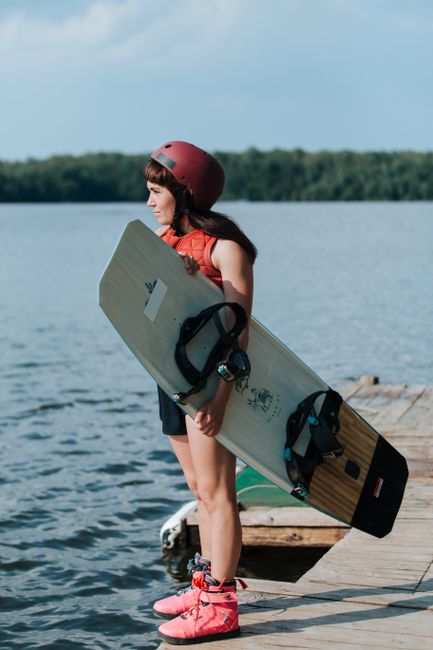
Open the storage locker on any wake boat and you’ll find the story of the family that owns it: a stack of vests in every size, a beat-up first board with stickers on the tip, a newer board with stiff boots for the teenager who’s started jumping the wake, a tangle of ropes and a helmet for cable park days. Getting the right wakeboarding gear makes it easier to get up, safer when you fall and more fun every set. This guide covers what to buy and why: approved life jackets (and why a “comp vest” isn’t one), boards and bindings, ropes and handles, helmets for cable parks, sun protection and the recovery gear for after a long lake day.
Buying guide · Our Wakeboarding buying guide compares the gear we'd pick, with prices and sizing:
Prices change often. The prices below are what we saw at the maker or a major retailer in October 2026; check the current price before you buy. Skiing too? Water skis have their own guide: water skiing gear.
Our top picks
Hyperlite Indy Life Jacket
- USCG approved, Level 70
- Neoprene, snug fit
- Quick-draining HyperVent
O'Brien System Wakeboard Package
- Bindings mounted
- Continuous rocker
- Extra-buoyant core
Ronix Vault Wakeboard with Divide Boots
- 135 cm package
- Boots 7.5-11.5
- Hybrid 3-stage rocker
Liquid Force TR9 Rope and Handle
- 65 ft static mainline
- 15 in aluminum handle
- EVA grip
Pro-Tec Ace Water Helmet
- Meets CE EN 1385
- 15 drain vents
- XS to XL
Liquid Force Fury with Rant Junior Bindings
- 120 cm: shoe 12T-5Y
- Lace-up junior bindings
- Removable center fin
Life jackets: Coast Guard-approved vests vs impact vests
This is the piece of gear that matters most. In the Coast Guard’s 2024 statistics, 87% of boaters who drowned, where life jacket use was known, weren’t wearing one. State laws can require towed riders to wear a Coast Guard-approved vest; Florida and Pennsylvania, for example, require one that isn’t inflatable. Federal rules also say each life jacket must be used according to its label, and the Coast Guard notes that some approved jackets are labeled not approved for water skiing or wakeboarding.
Impact or “comp” vests are thinner neoprene vests made for freedom of movement and to soften hard falls. Unless the label shows Coast Guard approval, one doesn’t count as your required life jacket, and the World Wake Association requires contestants to wear a Coast Guard-approved jacket or one that will float an unconscious rider. For everyday riding, buy an approved vest that’s labeled for towed sports, fits snugly and has a locking closure.
- Hyperlite Indy (about $70): Coast Guard approved at Level 70 (newer labels rate flotation from 50 to 275; lower levels suit calm water near shore). Neoprene that the maker says will feel tight when dry, with quick-draining vents.
- O’Brien Traditional Neoprene (about $85): approved in the US and Canada, with adjustable straps and buckles and a contoured shape for range of motion.
- O’Neill SuperLite (about $50): a Coast Guard Type III nylon vest the maker labels for wake, ski and tubing, with four quick-release buckles and sizes from S to 4XL. A good choice for stocking the boat.
- Jetpilot Shaun Murray Neoprene (about $140): a Coast Guard-approved neoprene vest for riders who want a premium wake-style cut.
For kids’ sizes and fit checks, see our youth page.
Check the Hyperlite Indy price on Amazon
Wakeboards: rocker, size and fins
A wakeboard’s rocker (the curve from tip to tail) shapes how it rides. Makers describe a continuous rocker as stable and predictable off the wake, which suits learning, and a three-stage rocker, which bends more sharply under the feet, as giving more boost for bigger jumps. Hybrid rockers sit in between. Length goes mostly with rider weight, so check the maker’s chart. Fins help the board track straight; removable center fins let riders loosen the board up as they progress.
- O’Brien System package (about $300): a continuous rocker, dual-barrel channels and center fins for tracking, and an extra-buoyant foam core the maker says makes getting up easier. Clutch bindings come mounted (the 140 cm version fits sizes 7–11).
- Ronix Vault with Divide boots (about $500, 135 cm): a hybrid three-stage rocker and Divide boots in sizes 7.5–11.5, for riders starting to jump the wake.
- Kids: the Liquid Force Fury with Rant Junior bindings (about $340, 120 cm for shoe sizes 12T–5Y) and the Hyperlite Murray Jr. (about $570); more on our youth page.
Check the O'Brien System wakeboard price on Amazon
Bindings and boots
Bindings (often called boots) lock your feet to the board, so fit matters for control and comfort. They should hold your heel down without pinching or numbing your toes. A package with bindings already mounted is the easy first buy. Most bindings can be moved on the board to adjust your stance; the maker’s manual shows the mounting options. Wet the liners before you slide your feet in, and never ride with a cracked binding or loose mounting screws. If you’ve sprained an ankle before, take it seriously: with both feet fixed, the ankle takes the load when the board stops suddenly (see our injuries page).
Ropes and handles
- Low-stretch wakeboard ropes keep the pull steady when you cut and jump. The Liquid Force TR9 (about $70) pairs a 65-foot static mainline with a 15-inch aluminum handle and a milled EVA grip; the Airhead Wakeboard Rope (about $38) is 65 feet of floating, pre-stretched line with three takeoff sections, so you can change the length as you learn.
- Handles: both ropes above have 15-inch handles with EVA grips; a cushioned grip is easier on the hands over a long day.
Check ropes for fraying every season, never coil or wrap the rope around your hands (board makers warn against it), and pull the rope into the boat before anyone gets near the stern with the engine on.
Check the Liquid Force TR9 price on Amazon
Helmets for cable parks and learning tricks
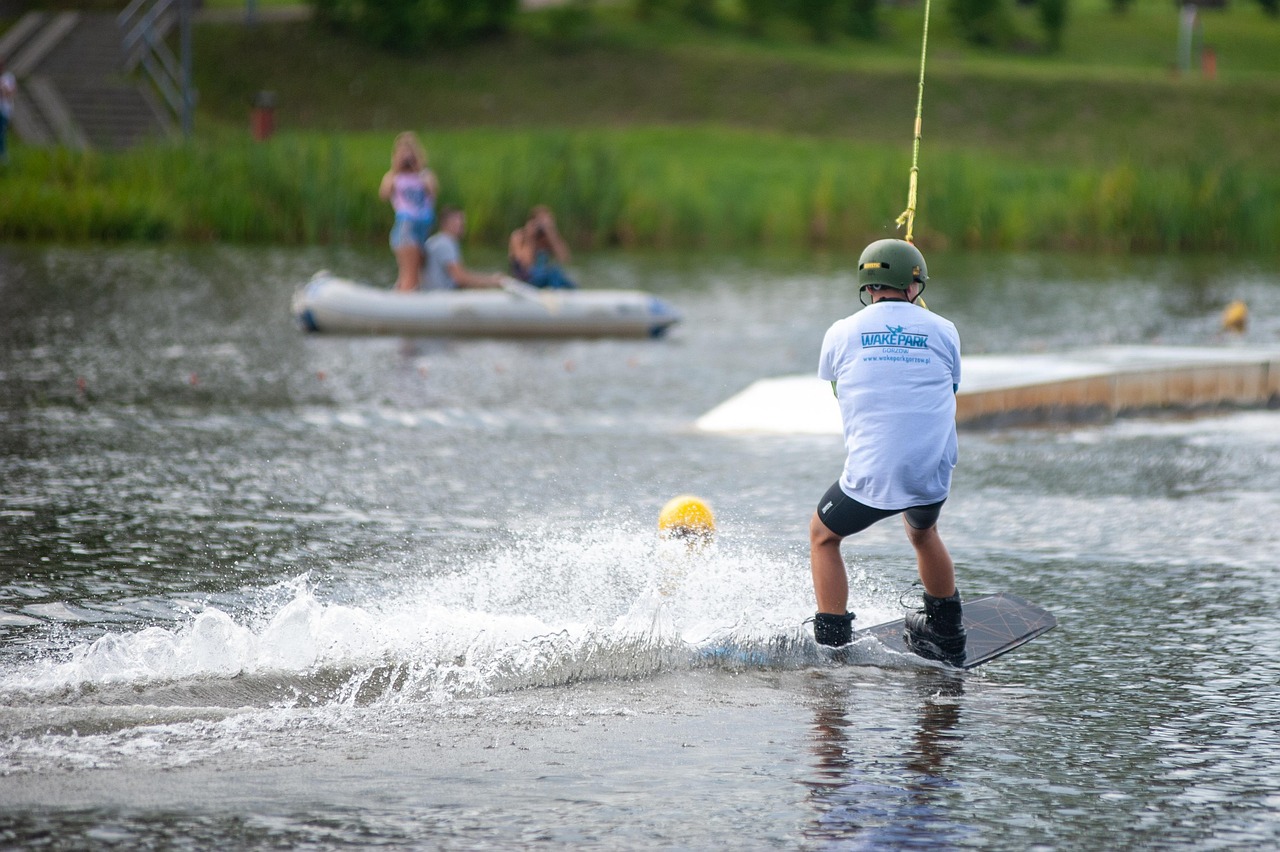
Head injuries made up 28.8% of wakeboarding injuries in a study of US emergency department visits. In World Wake Association events, anyone who hits a feature must wear a helmet, and cable parks set their own rules. Look for a water sports helmet tested to CE EN 1385, with drainage and a snug fit:
- Pro-Tec Ace Water (about $85): ABS shell, 15 vents that drain fast, a dual-density waterproof EVA liner, CE EN 1385, sizes XS to XL in three shell sizes.
- Liquid Force Hero (about $80): CE-certified, high-density ABS shell, a terry “sweat saver” liner and large vents.
- Triple Eight Halo Water (about $73): CE EN 1385, a removable washable liner and sizes from XS (51–52 cm), so it fits many kids.
Check the Pro-Tec Ace Water price on Amazon
Sun protection
Lake days mean hours of sun from above and glare off the water. The American Academy of Dermatology recommends a broad-spectrum, water-resistant SPF 30+ sunscreen, reapplied every two hours and after getting wet: Blue Lizard Sport SPF 50 (about $9) is a mineral sunscreen with 80 minutes of water resistance. For the driver and observer, polarized sunglasses such as the KastKing Skidaway (about $25, 100% UVA/UVB per the maker) cut glare, and a Croakies strap keeps them on board. A Buff CoolNet UV neck gaiter (UPF 50) covers neck and face.
Recovery gear for after the lake
A day of sets works the legs, back, shoulders and forearms. A foam roller such as the TriggerPoint GRID (about $40) is good for the upper back, quads and hips; a small massage gun like the Hypervolt Go 3 (about $149, 1.6 lb) handles tight forearms and shoulders; OOFOS OOahh slides (about $60) are easy on feet on the dock; and on hot days many riders add an electrolyte tablet like Nuun Sport to their water. These are comfort tools, not treatment: a knee, ankle or shoulder that hurts after a fall needs a sports medicine doctor, physical therapist or athletic trainer. Compare more in our best foam rollers, best massage guns, best recovery shoes and best electrolyte powder guides.
TriggerPoint GRID 1.0 Foam Roller
- 13 x 5 in
- Multi-density surface
- Hollow core
OOFOS OOahh Slide
- OOfoam slide
- APMA Seal of Acceptance
- Machine washable
Blue Lizard Sport Mineral Sunscreen SPF 50
- Zinc oxide and titanium dioxide
- 80-minute water resistance
- 3 oz
How to choose wakeboarding gear
- Buy approved vests first, one per rider and passenger, in the right sizes, labeled for towed sports.
- Match the board to your weight and level: check the maker’s size chart, and start with a forgiving continuous-rocker package before a pro model.
- Get bindings that fit: heel down, no pinching, mounted tight.
- Use a low-stretch wakeboard rope with a comfortable handle.
- Wear a helmet at cable parks and while learning to jump.
- Rinse and dry everything after use, and check bindings, fins and ropes each season.
Back to the wakeboarding hub, or see rules, hand signals and boat safety, youth and leagues and associations. For other board sports, see our surfing gear and snowboarding gear pages.
Wakeboarding gear questions
Is an impact vest a life jacket?
Only if it’s Coast Guard approved. An impact or “comp” vest without that approval doesn’t meet federal or state life jacket rules. Check the label for Coast Guard approval and for any warning that it isn’t approved for towed sports.
What size wakeboard do I need?
Board size goes mostly with rider weight, so use the maker’s chart. If you’re between sizes, ask the maker or a pro shop which way to go for your level.
Continuous or three-stage rocker?
Makers describe continuous rocker as smoother and more predictable, which helps beginners, and three-stage rocker as giving more pop off the wake for jumps. Hybrid rockers mix the two.
Do I need a helmet for wakeboarding?
It’s required on features in WWA competitions, and cable parks set their own rules. Behind a boat it’s optional but smart while you’re learning to jump, since head injuries are common in wakeboarding.
Can I use a water ski rope for wakeboarding?
You can, but wakeboarders usually prefer a low-stretch rope so the pull doesn’t spring back when they cut and jump. Many ropes are sold for both; check the label.