This article contains affiliate links: if you buy through them we may earn a commission, at no extra cost to you. Learn more.
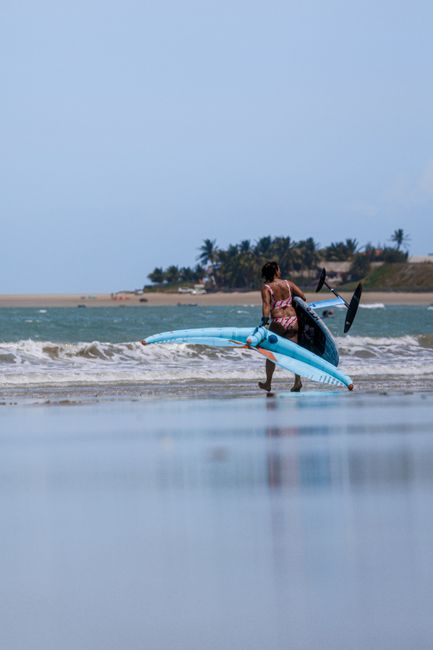
The back of the car on a breezy afternoon: a wing rolled up in its backpack, a foil board with sand still on the deck pad, the foil in its padded covers, a pump, a helmet clipped to the bag and a wetsuit drying over the seat. Wing foiling gear is simpler than kiting or windsurfing, but each piece has to match your weight, your level and your wind. Here’s a plain guide to the wing foil equipment you need: wings, foil boards by volume, foils, leashes and harnesses, then the protection (helmet, impact vest, wetsuit and boots) and the recovery kit for after.
Buying guide · Our Wing Foiling buying guide compares the gear we'd pick, with prices and sizing:
Prices change often. The prices below are what we saw at the maker or a major retailer in October 2026; check the current price before you buy.
Our top picks
Slingshot SlingWing V3
- 3 m inflatable wing
- Harness line pigtails
- Backpack, wrist leash, patch kit
Slingshot UltraFly Wing Foil Board
- 105, 120 or 140 L
- Pump included, packs for travel
- Foil sold separately
Ride Engine Quick Release Bungee Wrist Leash
- Made for wing foiling
- One-handed cuff
- Quick release
Ho Stevie! Foil Waist Leash (8 ft)
- Coiled, made for foil boards
- Padded waist cuff, key pocket
- Rail saver
Ride Engine Defender HF Impact Vest
- Made for wing and all foiling
- Impact shells in high-risk areas
- Not a life vest
Ride Engine Vinaka V2 Wing Harness
- 450 g, built for wing foiling
- Nug sliding hook
- Sizes S to XL
O'Neill Heat 3 mm Round Toe Boot
- 3 mm neoprene
- Round toe
- Textured rubber sole
The wing
A wing is an inflatable leading edge and center strut with a fabric canopy. You hold it by handles (or, on some race wings, a rigid boom) on the strut. What to look for:
- Size by weight and wind. Bigger wings make more power in light wind; smaller wings are easier to handle in strong wind and for light riders. A beginner chart from the wind retailer Windance suggests about 3 to 4 square meters for riders under 60 kg (130 lb), 4 to 5 for 60 to 75 kg, 5 to 6 for 75 to 90 kg, and 5.5 to 7 for heavier riders, in moderate wind. Many riders end up with two wings for different days.
- Windows. Clear windows let you see through the wing to spot other riders. Formula Wing racing now requires windows of at least 400 square centimeters per side.
- Handles and harness line. Long or multiple handles let you move your grip; harness-line attachment points let you hook in to rest your arms.
- A leash. Every wing should be leashed to you; GWA racing requires it.
The Slingshot SlingWing V3 (about $349; the 3-meter size is the one sold on Amazon) has elongated handles, a single-pump inflation system, a strut dump valve for quick packing and pigtails for a harness line, and comes with a backpack, wrist leash and patch kit. Three meters suits light riders, teens and windy days; heavier riders will want a bigger size from a shop.
Check the SlingWing V3 price on Amazon
Foil boards: pick by volume
Board volume, in liters, is the most important number for a beginner. More volume means more float, so you can kneel, stand and get going before the foil lifts; less volume is lighter and more nimble once you can take off reliably. Windance’s beginner chart, assuming moderate wind:
| Rider weight | Board volume | Wing size | Foil front wing |
|---|---|---|---|
| Under 60 kg (130 lb) | 85 to 105 L | 3 to 4 m² | 1,300 to 1,600 cm² |
| 60 to 75 kg (130 to 165 lb) | 95 to 115 L | 4 to 5 m² | 1,500 to 1,800 cm² |
| 75 to 90 kg (165 to 200 lb) | 110 to 130 L | 5 to 6 m² | 1,700 to 2,000 cm² |
| 90 to 105 kg (200 to 230 lb) | 125 to 145 L | 5.5 to 6.5 m² | 1,900 to 2,200 cm² |
| Over 105 kg (230 lb) | 135 to 165 L | 6 to 7 m² | 2,100 to 2,500 cm² |
Windance suggests staying at the upper end on lakes and in light wind, and sizing down once you take off consistently and foil confidently in both directions. If you’re new to board sports altogether, err bigger.
Inflatable or hard board?
Inflatable foil boards pack into a bag for travel and are gentler when they hit you; hard boards are stiffer and more direct. The Slingshot UltraFly (about $1,099 for 105 liters, also in 120 and 140) is an inflatable board with foil tracks, hard rubber edges, footstrap inserts and a high-pressure pump in the box; foil track hardware is sold separately. When you’ve progressed, a compact hard board such as the Slingshot Wing Craft V3 (about $499 in 80 liters, also 70) is a bamboo-sandwich all-rounder with footstrap options; that volume suits lighter or more experienced riders, not heavy beginners.
Check the Slingshot UltraFly price on Amazon
The foil
The foil is a mast, a fuselage, a front wing and a rear wing (the stabilizer). For learning, the key is a large, slow front wing (see the chart above) that lifts early and stays stable, on a mast that’s not too long; you’ll fall less far and touch down more gently. Faster, smaller wings and longer masts come later. Most riders buy a foil through a wind shop or school, because parts, mounts and sizes vary by brand, so check that the foil’s mount fits your board’s tracks. Protect it: a padded foil cover such as the Slingshot Hover Glide cover (about $35, sized for Slingshot’s Hover Glide foils) keeps the sharp edges from cutting people, cars and the foil itself.
Leashes and harnesses
- Wing leash: wrist or waist. The Ride Engine quick-release bungee wrist leash (about $65) has a one-handed cuff and a quick release for emergencies.
- Board leash: optional for some riders, but useful so the board doesn’t drift away when you fall. Foil-specific leashes are coiled so they don’t drag in the water or wrap around the mast. The Ho Stevie! foil waist leash (about $45) is 8 feet stretched and 21 inches coiled, with a padded waist cuff and rail saver.
- Harness: once you can ride, a harness and harness line take the wing’s weight off your arms for long runs. The Ride Engine Vinaka V2 (about $154) weighs 450 grams, and its sliding hook moves out of the way when you paddle or climb on.
Helmets and impact vests
The foil and board cause most wing foiling injuries: in a 2023 survey of 415 riders, the foil or mast caused 26% of injuries and the board 20%. Helmets are mandatory and impact vests recommended in GWA racing, and most riders in the study wore both. The study couldn’t prove they cut head and rib injuries, but its authors still endorse them.
- Helmet: choose one made for water sports that drains and fits snugly. The Pro-Tec Ace Water (about $66) meets CE EN 1385 for water sports, with 15 vents and sizes XS (52 to 54 cm) to XL (60 to 62 cm).
- Impact vest: pads ribs and back. The Ride Engine Defender HF (about $164) is designed for kite, surf, windsurf and wing foiling, with internal impact shells in high-risk areas and a front zip. The Dakine Surface impact vest (about $170) is neoprene and works with seat and waist harnesses.
- Remember: both makers state their vests are not flotation devices or life vests. If you need flotation, wear a real life jacket.
Wetsuits, boots and sun
The National Weather Service says to dress for the water temperature, not the air. O’Neill’s thickness guide suggests a UV shirt or rash guard from 79°F (26°C), a 2 mm suit or shorty from 70 to 77°F, a 3/2 or 4/3 full suit from 64 to 68°F, a 4/3 or 5/4 from 54 to 63°F, and 5/4 or thicker with hood, gloves and boots below that. The O’Neill Reactor-2 3/2 mm (about $155 to $160) is an entry-level back-zip full suit with stretch neoprene and flatlock seams.
Boots matter more than you’d think. Feet were the most injured body part in the 2023 study, and its authors recommend cut-resistant neoprene boots whatever the water temperature. The O’Neill Heat 3 mm round toe boot (about $80) has a textured rubber sole for grip and protection; in warm water, the thinner O’Neill Reactor 2 mm reef bootie (about $55) works too. Neither is sold as cut-resistant, so treat them as protection, not armor. Add broad-spectrum, water-resistant SPF 30+ sunscreen, as the American Academy of Dermatology recommends.
Recovery gear for after
Holding a wing loads the shoulders and forearms, and foiling works the legs; in the 2023 study, overuse aches were most common in the shoulder, elbow and knee. Many riders roll out with a foam roller such as the TriggerPoint GRID 1.0 (about $40) and slip into soft OOFOS OOahh slides (about $60) after a day in boots. These are comfort tools, not treatment; pain that lasts more than a few days is a reason to see a sports medicine doctor, physical therapist or athletic trainer. Compare more in our best foam rollers, best massage guns and best recovery shoes guides, and see the wing foiling recovery page for a routine.
TriggerPoint GRID 1.0 Foam Roller
- 13 x 5 in
- Multi-density surface
- Hollow core
OOFOS OOahh Slide
- OOfoam slide
- APMA Seal of Acceptance
- Machine washable
The wing bag checklist
- Wing (or two sizes), pump and wing leash
- Board, foil, foil covers and the tool and screws to mount it
- Board leash and harness, once you use one
- Helmet, impact vest and boots
- Wetsuit or rash guard for the water temperature, plus a warm layer for after
- Sunscreen, water, a snack and a phone in a waterproof case left with a friend
More: rules and foil safety, wing foiling for kids, wing foiling injuries, the best wearables for wing foilers, and our kitesurfing gear and paddleboarding pages.
Wing foiling gear FAQs
What size wing foil board should a beginner get?
Go big. A common retailer guide puts beginners at roughly 85 to 105 liters under 60 kg (130 lb), 95 to 115 liters at 60 to 75 kg, and 110 to 130 liters at 75 to 90 kg, with more for heavier riders and light-wind lakes. You’ll size down once you take off reliably.
What size wing do I need?
It depends on your weight and your wind. In moderate wind, beginner charts suggest about 3 to 4 square meters for riders under 60 kg and 5 to 6 for 75 to 90 kg. Lighter wind needs a bigger wing; strong wind a smaller one.
How much does wing foiling gear cost?
It adds up. As seen in October 2026, a wing like the SlingWing V3 was about $349 and an inflatable board like the UltraFly about $1,099, and the foil is extra. Add a helmet (about $66), an impact vest (about $164) and a wetsuit. Many riders learn on school gear and buy used.
Do I need a board leash for wing foiling?
You always need a wing leash. A board leash is a personal choice, but many riders use a coiled foil leash so the board stays close after a fall and doesn’t drift into others.
Is an impact vest the same as a life jacket?
No. Impact vests protect your ribs and back in a crash, but makers like Ride Engine and Dakine say plainly they are not life vests or flotation devices. Wear a real life jacket if you need flotation.