This article contains affiliate links: if you buy through them we may earn a commission, at no extra cost to you. Learn more.
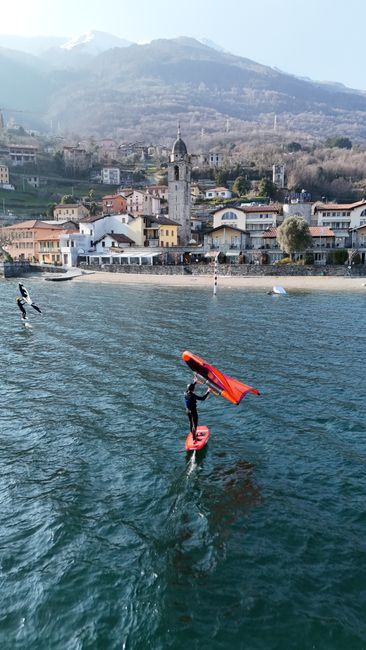
A summer morning at the lake: a 12-year-old kneels on a big, floaty board with a small wing in her hands while an instructor in a rescue boat calls out, “Pull the back hand in, a little more…” By lunch she’s standing; by the end of the week the board lifts for a few seconds and she lets out a yell you can hear from the beach. A lot of families are finding their way into wing foiling, and parents ask the same questions: how old is old enough, is the foil safe, and how do we find good lessons? This page answers them for wing foiling for kids and teens, from first lessons to youth world championships.
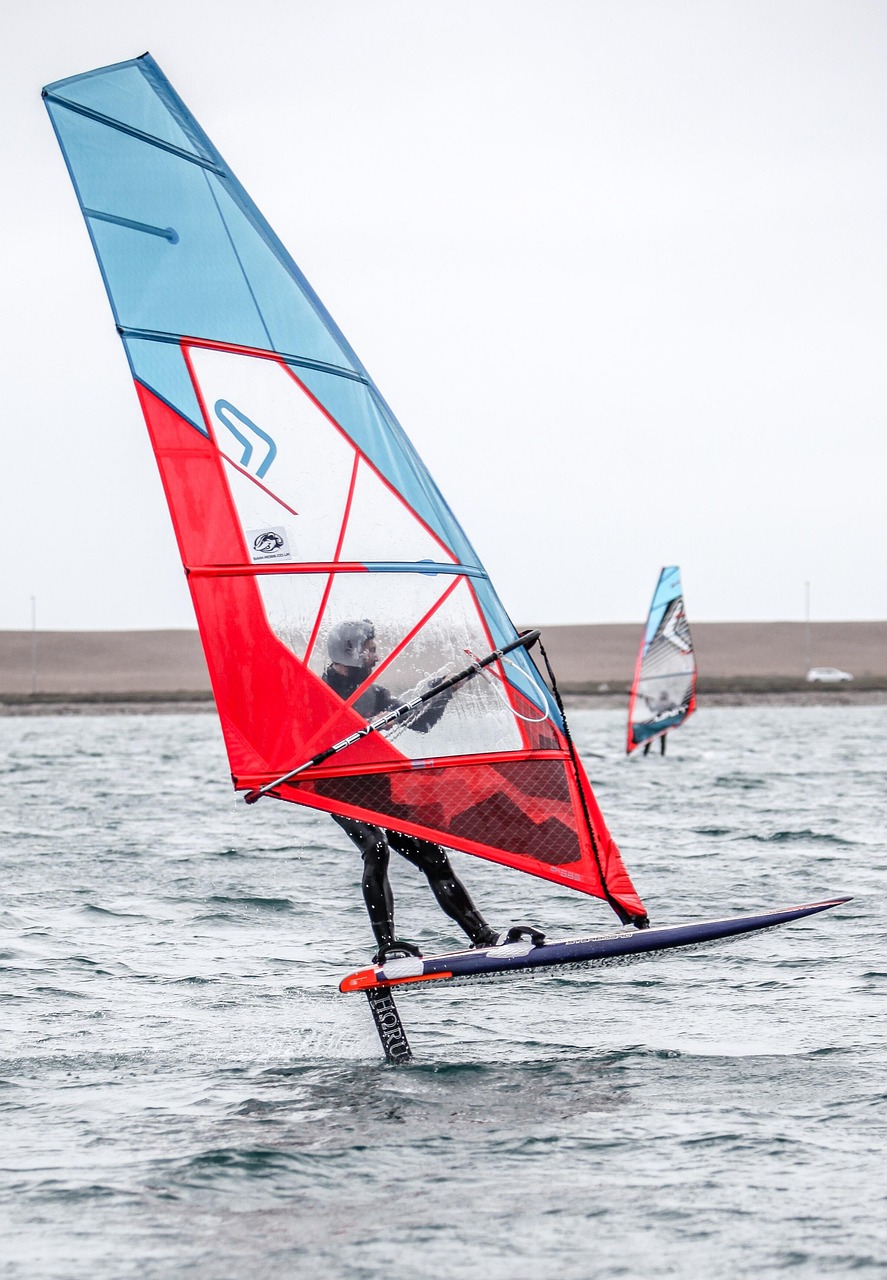
For the whole sport, see our wing foiling hub. If your child is drawn to kites or sails instead, see kitesurfing for kids or windsurfing.
What age can kids start wing foiling?
The International Kiteboarding Organization (IKO), which certifies wing foil instructors, sets a minimum age of 12 for its wing foil course, along with a minimum swimming level. Younger children can be taught, but only by an instructor who has completed IKO’s online course on teaching children. Riders younger than that do exist: in a 2023 survey of 415 wing foilers, the youngest was 9.
In practice, size, swimming and focus matter as much as age. Wings come in small sizes, and US Sailing describes wingfoil as built for youth and adults alike. As a guide to scale, one retailer’s beginner chart starts riders under 60 kg (130 lb) on a 3 to 4 square-meter wing and an 85 to 105 liter board; smaller kids may need smaller gear and lighter wind still. A good school will have kid-sized equipment and will tell you honestly when your child is ready.
- Before 12: many kids build skills on a stand-up paddleboard, a surfboard or a small wing on a big board without a foil, close to shore.
- 12 and up: lessons with a certified instructor, starting on the knees on a big board, then standing, then the foil.
- Early teens: riding upwind, jibes and tacks, then local races or freestyle jams.
- 14 and up: the minimum age for the GWA’s senior world tour; youth events start at U14.
Lessons with certified instructors
Most adult wing foilers taught themselves (85% in the 2023 survey), but that’s not the way to start a child. The same study found injury rates were highest among beginners and fell as riders gained experience, and its authors say good school training, from how to fall to how to stand, can help prevent injuries. IKO’s wing foil course covers setup, handling the wing on the beach, getting in and out of the water, self-rescue, right-of-way rules, riding on the knees and standing, pumping onto the foil, riding upwind and downwind, foot changes, jibes, tacks and catching swell. IKO estimates about an hour per skill, depending on the student, the wind and the spot.
What to ask a wing foil school
- Are your instructors certified (IKO, IWO, RYA or similar), and trained to teach children?
- Do you provide a helmet, an impact vest or life jacket, and boots in kids’ sizes?
- Do kids start off the foil, or on a short, slow beginner foil?
- Is there a rescue boat, and do you use radio helmets?
- What wind, water depth and group size do you teach with kids?
Our leagues and associations page explains the certifying bodies, and our rules and safety page explains right of way, which IKO teaches before kids ride alone.
Is the foil safe for kids?
The foil is the part parents worry about, and with reason: in the 2023 study, contact with the rider’s own foil or mast caused 26% of injuries and the board another 20%. Most injuries were bruises, sprains, cuts and scrapes to the feet, lower legs and knees, and serious injuries were rare. The rules that keep kids safe are simple:
- Helmet and impact vest every time. They’re mandatory (helmet) and recommended (vest) in GWA competition, including youth events.
- Boots: the study’s authors recommend cut-resistant neoprene boots whatever the water temperature.
- Fall away from the foil, flat and to the side, and cover the head when coming up near the board.
- Short sessions. Riders blamed 77.5% of injuries on mistakes from fatigue, and most came in the second hour. Kids tire faster than they admit.
- Foil covers on the beach, and nobody plays around a foil that’s lying on the sand.
- Never alone. An adult on shore who’s watching, a rescue plan, and side-shore or side-onshore wind only.
Safety gear for young riders
- Helmet: one made for water sports. The Pro-Tec Ace Water helmet (about $66) meets the CE EN 1385 water-sports standard and starts at size XS (52 to 54 cm).
- Flotation: an impact vest is not a life jacket. For young or less confident swimmers, a real life jacket such as the O’Neill Youth Superlite (about $41; US Coast Guard Type III, 50 to 90 lb) is the safer choice.
- Wetsuit or rash guard: dress for the water temperature, not the air, as the National Weather Service advises. In warm water, a long-sleeve sun shirt like the O’Neill Youth Basic Skins UPF 50+ (about $30) covers arms and back.
- Sunscreen: the American Academy of Dermatology recommends broad-spectrum, water-resistant SPF 30 or higher, reapplied every two hours and after swimming.
- Leashes: a wing leash so the wing never blows away, which GWA rules require in competition.
Concussion: recognize and remove
A hit from the board or foil, or a hard fall, can cause a concussion. The CDC’s HEADS UP program asks parents to watch for a child who seems dazed or confused, is slow to respond, or complains of headache, dizziness, nausea, light sensitivity or trouble concentrating. Take them off the water for the rest of the day, keep them out until a healthcare provider clears them, and call 911 for danger signs such as seizures, passing out, a worsening headache or repeated vomiting.
Growing bodies
Holding a wing for an hour loads young shoulders and backs, and the study found overuse aches mostly in the shoulder, elbow and knee. Keep sessions short, mix in other sports, and see a sports medicine doctor, physical therapist or athletic trainer for pain that lasts more than a few days or changes how your child rides. Our wing foiling injuries page has more.
From lessons to youth competition
Most kids ride for fun and never compete. For those who want to, the ladder is clear:
- Local: club races, freestyle jams and downwinders with friends.
- National: US Sailing’s U.S. Wingfoil Championship on San Francisco Bay, with high-performance and recreational fleets.
- GWA youth: divisions for U14, U16 and U19 by birth year, in Surf-Freestyle and FreeFly-Slalom. The 2024 GWA Youth Wingfoil World Championships in La Palma crowned boys and girls in all three age groups.
- Racing classes: the X-15 one-design world championship includes youth (under 19) and junior (under 15) titles, and Formula Wing has smaller wing-size splits for women and youth under 19.
- Senior tour: the GWA World Tour from age 14 in the year of competition.
Teens on the water for hours also need real food, fluids and sleep: see our session day page and recovery page. For a first wing, the Slingshot SlingWing V3 in the 3-meter size (about $349) suits light riders; it comes with a wrist leash, backpack and patch kit.
Prices change often. The prices above are what we saw at the maker or a major retailer in October 2026; check the current price before you buy.
Pro-Tec Ace Water Helmet
- CE EN 1385 water-sports standard
- 15 vents for drainage
- Sizes from XS (52 to 54 cm)
O'Neill Youth Superlite USCG Life Vest
- USCG Type III
- 50 to 90 lb
- Three quick-release buckles
O'Neill Youth Basic Skins UPF 50+ Long Sleeve
- UPF 50+
- Long sleeve
- Youth sizes
Slingshot SlingWing V3 (3 m)
- 3 m size for light riders
- Wrist leash included
- Backpack and patch kit
More for young riders: the full gear guide, training, and our youth sailing and youth surfing pages.
Parents’ questions about wing foiling
What is the minimum age for wing foiling lessons?
IKO’s wing foil course has a minimum age of 12 and a minimum swimming level. Younger kids can be taught only by instructors who have done IKO’s course on teaching children, and size and swimming ability matter as much as age.
Is wing foiling safe for teenagers?
It carries real risk, but most injuries are minor bruises, sprains and cuts, and injury rates fall with experience. Certified lessons, a helmet, an impact vest or life jacket, boots, short sessions and never riding alone make a big difference.
Does my child need to be a strong swimmer?
Yes. IKO requires a minimum swimming level, and wing foilers spend a lot of time in the water: falling, swimming back to the board and climbing back on.
Is wing foiling easier for kids than kitesurfing?
Many families find it simpler to start, because a wing loses its power the moment you let go and there are no long lines. The foil takes time to learn, so lessons and patience still matter.
How old do you have to be to compete?
GWA youth events have U14, U16 and U19 divisions, and its senior World Tour has a minimum age of 14 in the year of competition. Local races and the U.S. Wingfoil Championship are the usual first steps.