This article contains affiliate links: if you buy through them we may earn a commission, at no extra cost to you. Learn more.
Saturday morning at the lanes: a row of kids in rental shoes, bumpers up, a coach kneeling at the foul line showing a seven-year-old how to swing the ball between her legs. Two lanes over, a 15-year-old with his own ball and a wrist support is working on a spare he missed last week. Youth bowling is one of the few sports where a shy kid, a kid who doesn’t love running, and a future college athlete can all find a place on the same Saturday. This guide is for parents and coaches: where kids start, the right kids’ bowling ball weight, bumpers, safety, high school and college paths, and scholarships.
Prices change often. The prices below are what we saw at the maker or a major retailer in October 2026; check the current price before you buy.
For the big picture, start at our bowling hub.
Where kids start
- Open bowling and parties: bumpers, a light house ball and a two-handed push. USBC’s rulebook notes the two-handed delivery between the legs is the style most youth use when they first learn, and it’s legal at every level.
- USBC Youth leagues: weekly leagues at local centers. Youth membership is for anyone who hasn’t turned 18 before August 1 of the season; national dues are $4 a year, and centers may add a service fee. Kids pay by their third league session.
- USA Bowling: a team-based youth program built like other youth sports, with a league and a national tournament for U12 and U15 teams that qualify at regional events. The 2027 national championships are in Indianapolis in July.
- Bowler’s Ed: USBC’s in-school program brings bowling into physical education classes and is built for students of any ability.
- Tournaments: local association youth tournaments, the Bowling.com Youth Open Championships (open to all USBC Youth members) and the Junior Gold Championships for serious bowlers in U12, U15 and U18 divisions.
Bumpers: how long?
Bumpers keep young kids having fun instead of watching gutter balls. USBC can certify bumper leagues and modified formats, but games bowled with bumpers don’t count toward a standard average, and only standard games qualify for USBC high-score awards. Most kids are ready to try without them when they can get the ball to the pins at a steady pace and want a “real” score. There’s no rush.
What weight bowling ball for a kid?
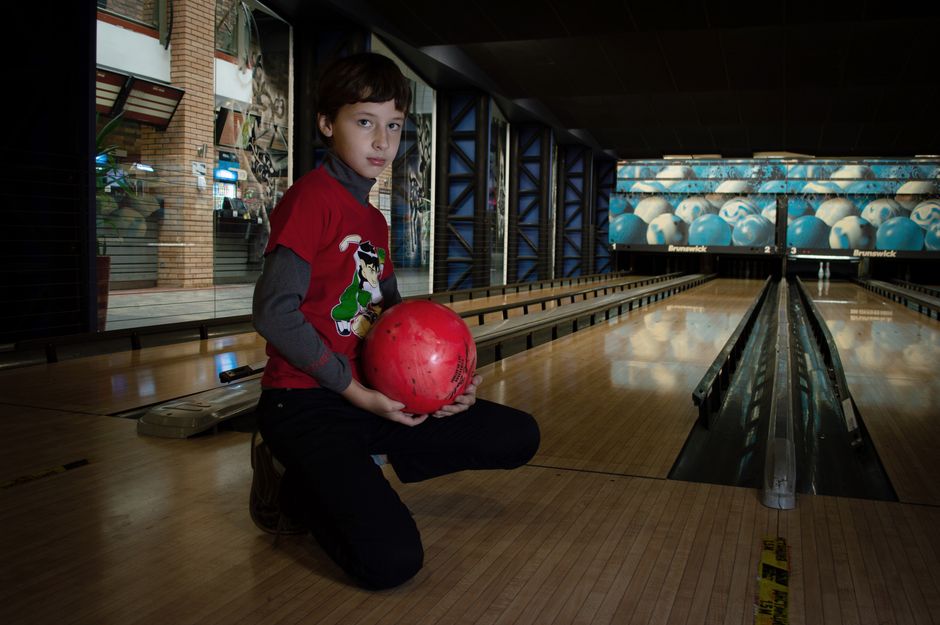
USBC sets a maximum of 16 pounds and no minimum, so a 6-pound ball is perfectly legal. Bowling retailers give two common starting points: about 10% of body weight, or 6 to 10 pounds for kids and younger teens depending on size and strength. Then test it.
- The swing test: your child holds the ball and swings it gently back and forth. If the ball seems to be swinging the arm, it’s too heavy.
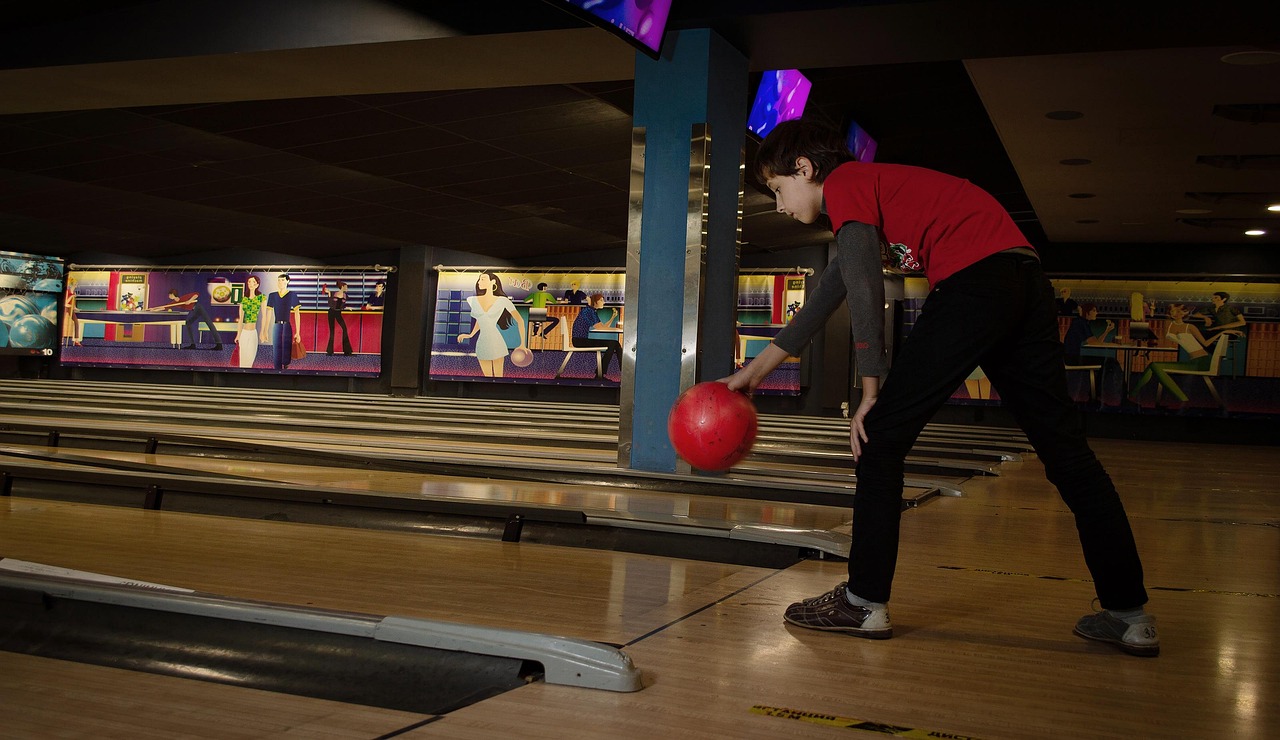
- Watch the delivery: a kid who drops the ball on the approach, lofts it, or twists the whole body to get it moving needs a lighter ball.
- Fit matters as much as weight: house balls have holes drilled for nobody in particular. A child’s own ball, drilled to their hand by a pro shop, is easier to hold without squeezing. Hands grow, so re-check the fit as your child does.
- No thumb? If your child bowls two-handed without the thumb, their ball can’t have a thumbhole under USBC rules; a pro shop marks a “+” on the palm area instead.
For a first ball, the Brunswick T Zone is a durable polyester ball sold from 6 to 16 pounds (about $65 on Amazon), and the Pyramid Path polyester ball starts at 8 pounds (about $70). Plastic balls roll straight, which is what a young bowler needs, and they stay useful later as a spare ball. Have a local pro shop drill it. A simple single-ball tote like the Pyramid Path Pro Deluxe (about $35) means nobody carries a ball by the finger holes across the parking lot.
Brunswick T Zone Bowling Ball
- Polyester coverstock
- Sold from 6 to 16 lb
- Drill it at a pro shop
Pyramid Path Polyester Bowling Ball
- Polyester coverstock
- 8 to 16 lb
- Straight shots and spares
Pyramid Path Pro Deluxe Single Tote
- 1 ball + shoes
- Padded strap
- Fits a ball locker
Keeping kids safe at the lanes
Bowling is a low-risk sport, and most kids’ injuries are minor. Two U.S. emergency-room studies show the pattern:
- In data from 1990 to 2008 (Kerr and colleagues, 2011), children under 7 had a much higher share of finger injuries (49.2%) and of injuries from dropping the ball (42.8%) than older bowlers.
- In 755 youth cases from 2014 to 2023 (Physician and Sportsmedicine, 2025), the most injured areas were fingers (30.7%), face (9.3%), wrist (8.6%), knee (7.4%) and lower back (6.8%). Kids 5 to 10 had more finger and face injuries, including fractures, cuts and crush injuries; teens 11 to 18 had more wrist, knee and low back injuries, mostly sprains and strains.
What that means on a Saturday morning:
- Ball return rules: pick up the ball with both hands from the sides, fingers away from where balls come back. Kids wait for their ball in the settee, not with their hands on the return.
- Personal space: only the bowler on the approach. Little ones walk into backswings.
- Dry shoes: no running, no bowling shoes outside or in the bathroom, and shoe covers for trips to the snack bar. USBC’s etiquette list calls wet shoes a safety hazard.
- Teens: wrist, knee and back pain in a teen who bowls several times a week deserves attention, not toughing it out. Check ball weight and fit first, then see a sports medicine doctor, physical therapist or the school’s athletic trainer.
- Bumps to the head: if a child falls or gets hit and seems dazed, confused or has a headache, dizziness, nausea or blurry vision, the CDC’s HEADS UP advice is to stop play for the day and have a healthcare provider check them. Call 911 for repeated vomiting, a seizure, a worsening headache or growing drowsiness.
More on our bowling injuries page.
Who’s looking after my child?
USBC members agree to follow the U.S. Center for SafeSport’s Minor Athlete Abuse Prevention Policies, and adults in official youth roles (league supervisors, coaches, tournament managers) are USBC Registered Volunteers. Under USBC rules, Registered Volunteers can be disciplined for using tobacco, e-cigarettes, alcohol or illegal drugs while involved in youth activities, or for foul language, and USBC asks other adults at youth leagues to refrain from smoking and drinking too. Youth bowlers are held to the same standard. You can look up a Registered Volunteer on bowl.com.
Prizes, Rule 400 and scholarships
Here’s the rule that surprises parents: youth bowlers can’t win cash. Under USBC Rule 400, a youth member can’t bowl in any event that offers cash, bonds, or merchandise worth more than $500 as prizes. The exception is singles events, where a youth can bowl if they and a parent sign USBC’s consent form and the prize is paid as a scholarship (or the youth waives it). Breaking the rule can cost a youth membership. Prizes that a state high school association or a recognized college association allows aren’t limited by it.
That’s why bowling is unusually good at scholarships. USBC says more than $9 million in scholarships is awarded to youth bowlers each season, and its SMART program (Scholarship Management and Account Reporting for Tenpins), running since 1994, holds the money in each bowler’s account until it’s used for school. SMART paid out a record $13 million in 2024. National USBC scholarships include:
- A $6,000 award each year to one female and one male high school junior or senior for bowling, academics and community involvement.
- Five $5,000 scholarships in honor of Earl Anthony, for academics, community service and financial need; bowling success isn’t considered.
- Up to 12 Gift for Life scholarships of $1,000 for high schoolers with financial need and a 2.0 GPA.
- The Dexter High School All-American Team: five boys and five girls, $1,000 each.
Most national awards ask for a minimum 3.0 unweighted GPA, at least three years in certified leagues, tournaments or high school bowling, and a 500-word essay. Local associations and tournaments add many more, and the Junior Gold Championships alone had a scholarship fund of about $500,000 in 2025.
High school and college
In the NFHS 2024-25 survey, 33,609 boys and 26,224 girls bowled for high school teams in the states that report the sport (26 for boys, 27 for girls), plus 11,161 in Unified Bowling. In college, women can bowl for an NCAA program, part of a National Collegiate championship that Jacksonville State won in 2026, and Division II gets its own championship in 2028. Men and women also bowl for teams in USBC Collegiate. Our leagues and associations page covers both, and our bowling training page covers how to get better.
Looking at other sports for your kid? Our youth soccer guide and junior golf guide answer the same parents’ questions. And for the bowling bag essentials, see our bowling gear list.
Parents’ questions about youth bowling
What weight bowling ball should an 8-year-old use?
Usually something in the 6- to 10-pound range, depending on size and strength. Start around 10% of body weight and do the swing test. If the ball pulls the arm or gets dropped on the approach, go lighter.
Do bumper games count toward a youth bowling average?
Not toward a standard average. USBC can certify bumper leagues, but those games are kept separate and don’t qualify for USBC high-score awards.
Can my child win money bowling?
Not as cash while they hold youth membership. Prizes go into a SMART scholarship account instead. Youth can enter adult singles events with cash prizes only with a signed consent form and the prize paid as a scholarship.
Should my child get their own bowling ball?
Once they bowl every week, yes. A ball in the right weight, drilled for their hand by a pro shop, is easier to control and easier on fingers and wrists than a house ball. Plan to re-check the fit as their hands grow.
Are there real college scholarships for bowling?
Yes, two kinds. Youth bowlers earn USBC and local scholarships through leagues, tournaments and applications, held in SMART accounts. And college programs, including NCAA women’s teams, recruit bowlers onto their rosters.