This article contains affiliate links: if you buy through them we may earn a commission, at no extra cost to you. Learn more.
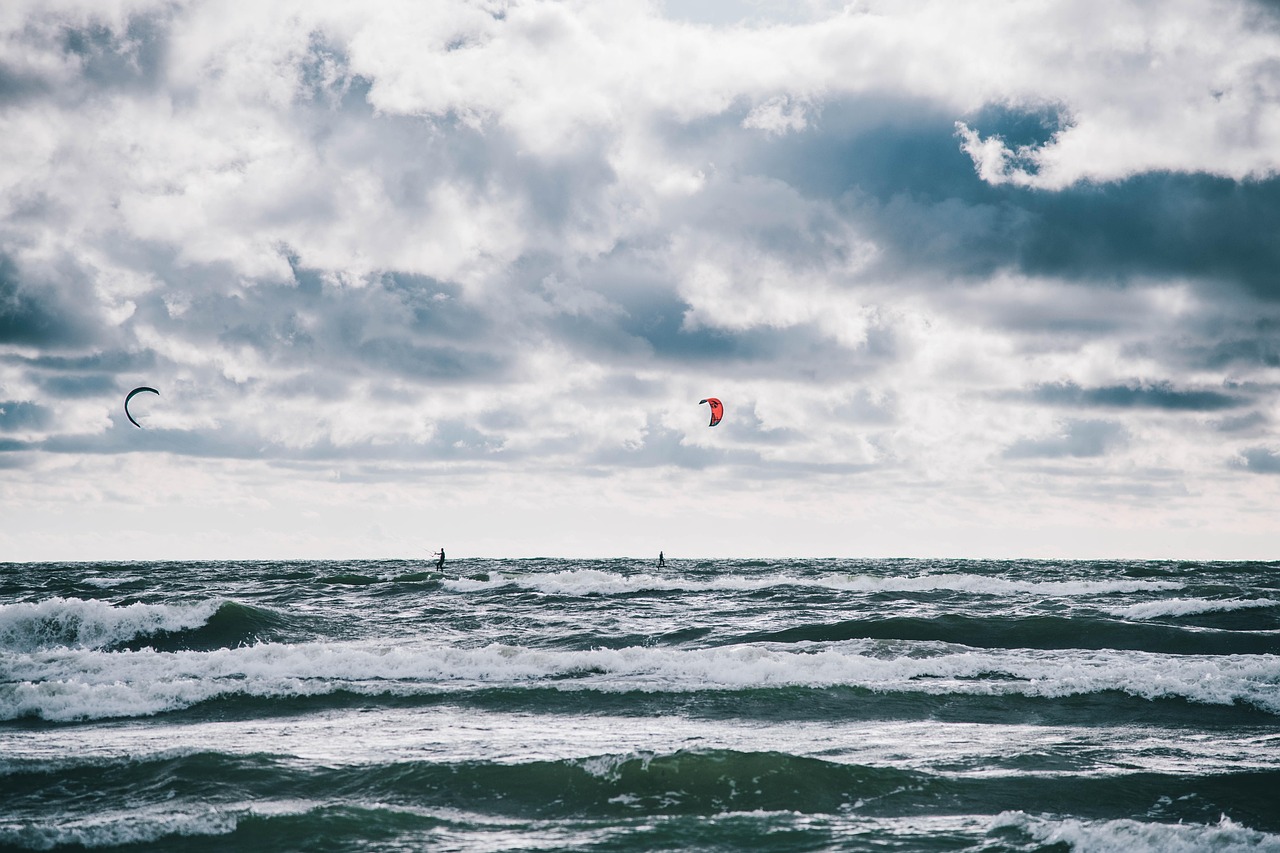
A windy Saturday at a busy kite beach. Two riders are heading straight for each other across the bay, a third is launching from the sand, a fourth is boosting a jump downwind and a foiler is carving on a swell. Nobody collides, because everyone knows the same few rules. Kitesurfing has no referee on a normal day, so the kitesurfing rules that matter most are the rules of the road and the safety habits that keep a crowded spot fun. Then there are the racing rules, all the way up to the Olympics. This page covers both in plain words.
For the big picture, start at our kitesurfing hub.
Kiteboarding right of way
Kite schools teach a short set of right-of-way rules borrowed from sailing. “Tack” means which side the wind comes from: on starboard tack the wind comes over your right side and your right hand is forward; on port tack it’s your left.
- Starboard tack has right of way. The rider on port tack keeps clear.
- On the same tack, the upwind rider gives way to the downwind rider.
- When two kiters pass, the upwind rider flies the kite high and the downwind rider flies it low, so the lines can’t cross.
- A rider leaving the beach has priority over a rider coming back in.
- A rider on a wave has priority over riders heading out to it, and when two share a wave, the one closest to the peak has it.
- Give way to riders who have fallen, are body dragging back to their board or are clearly beginners. They can’t steer around you.
- Jumps and tricks come with no right of way. Never jump upwind of another rider or close to shore. One US kite school suggests clearing about 50 meters upwind and 100 meters downwind before a trick.
The rule above all rules: having right of way doesn’t let you hit anyone. The other rider may not know the rules or may not have seen you, so change course early and obviously. If two kites tangle anyway, both riders should use their quick-release right away so the kites can come down and separate.
Your lines are part of your space
A kiter takes up far more room than a board on its own: the kite flies on long lines that are thin, hard to see and under heavy load while you ride. Never ride or fly your kite over another rider, a swimmer or a boat, and don’t let your lines cross anyone’s path on the beach. When you stop in the water, keep your kite high and still rather than parked low across the water where someone could ride into your lines. Foilers need extra space too, because the foil under the board is hard and fast.
Sharing the water with boats, surfers and swimmers
On shared waterways, think beyond the beach. Under the US Coast Guard Navigation Rules, small craft must not impede vessels that can only navigate in a narrow channel, and a ferry or a ship can’t stop or turn for you. Stay out of channels and harbor mouths, keep well clear of swimmers, surfers and anchored boats, and give paddlers and other wind riders plenty of room. Windsurfers have their own guide at windsurfing rules.
Safety systems and quick releases
A kite keeps pulling until you take its power away, which is why every modern kite comes with layered safety systems. Learn them in your first lesson and practice them until they’re automatic:
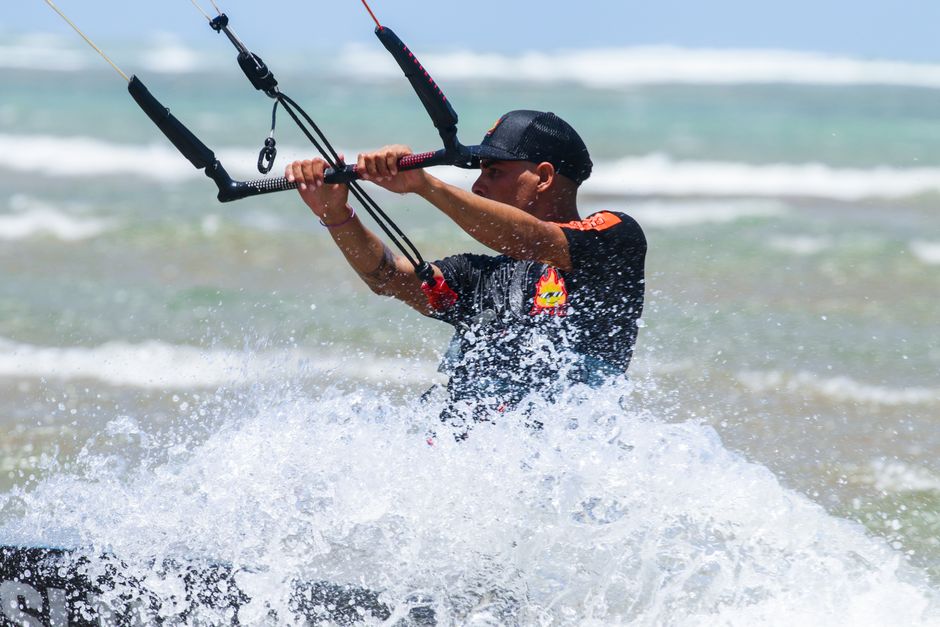
- Depower first. Pushing the bar away from you reduces the kite’s power. Letting go of the bar entirely depowers it further while you stay attached.
- Quick-release (chicken loop release). Pulling or pushing the release on the loop that connects you to the bar disconnects you from the main power lines. The kite flags out on one line, attached to you by the safety leash.
- Safety leash release. The leash has its own quick-release, so you can let go of the kite completely as a last resort, for example if you’re being dragged toward an obstacle or your lines are tangled with another kite.
- Hook knife. Many harnesses have a pocket for a small line-cutting knife, for lines wrapped around a limb or a tangle that won’t clear.
- Self-rescue. If the wind drops or your gear breaks, schools teach you to wrap the lines and use the kite as a sail to get back to shore.
Since February 2020, the international standard ISO 21853 sets how kite-bar quick-releases, including the safety-leash release, must work: they must open with a force of 170 newtons or less and in 2 seconds or less, tested in sand, water and cold, wet conditions. Rinse sand and salt out of your release after sessions and test it before you launch.
Why it matters: in a 2004 study of 235 kitesurfers, 56% of injuries were blamed on riders who couldn’t detach from the kite after losing control of it. A 2025 German study found release systems didn’t change how often riders were hurt, which is a reminder that the release only helps if you use it early, and that avoiding trouble (wind choice, space, lessons) matters most. The best riders release early and then deal with the board and the gear; a board can be found again, a body dragged into rocks can’t be undone.
Two simple pieces of safety kit go in every kiter’s bag: a hook knife with pocket (about $14 to $16) for the harness, and a helmet such as the Pro-Tec Ace Water (about $66), which meets the CE EN 1385 water-sports helmet standard.
Haihong Kitesurfing Hook Safety Knife with Pocket
- Hook blade for lines
- Pocket for the harness
- Compact
Pro-Tec Ace Water Helmet
- CE EN 1385 water-sports standard
- 15 vents for drainage
- Sizes XS to XL
Ride Engine Defender HF Impact Vest
- Built for kite and foil riding
- Impact shells in high-risk areas
- Not a life jacket
Launching and landing etiquette
Most kite accidents happen close to shore, and launching and landing are the riskiest moments of a session. A 2026 survey of 442 kitesurfers found most injuries happened within 50 meters of the shore.
- Check the wind first. Side-shore and side-onshore wind are the classic choices; offshore wind blows you away from land and is for experts with boat support only. Gusty, building wind before a storm is a reason to stay on the beach.
- Launch with a competent helper. Ask another kiter; don’t let an unskilled onlooker launch or land your kite. Agree on hand signals first; your school will teach the standard ones.
- Keep a clear zone downwind. No people, cars, trees, buildings or power lines in the area the kite could drag you into. Check your lines and your release before every launch.
- Land early. If the wind is picking up beyond your kite, come in while you’re still in control, and get help to land.
- Never leave a kite unattended without securing it. A loose kite can take off and injure someone; weigh it down with sand or disconnect and roll it up.
Beach rules
Many beaches have local rules for kiting: designated rigging areas, launch zones and access lanes, seasonal bans when beaches are crowded, or areas closed for wildlife. Use the rigging and landing areas, use the access lanes to go in and out, don’t lay lines across paths, and stay well away from swimmers. Some spots also expect riders to stay a set distance off the beach. Read the signs, talk to the local kite school or club, and follow what they ask; one careless rider can get a spot closed for everyone.
Life jackets: rules for kiteboards vary by state and by beach, so check the local rules where you ride. Flotation is smart for beginners, cold water and anyone riding far from shore. A Norwegian study of kite injuries recommended both a helmet and a life vest for kitesurfing. Remember that impact vests protect against hits but aren’t certified flotation.
Racing basics: Formula Kite
Kite races run under the Racing Rules of Sailing, published by World Sailing, which also cover yacht and dinghy racing. The core right-of-way rules (port gives way to starboard, windward keeps clear) are the same ones you use at the beach.
Formula Kite is the Olympic kite class: riders race foil kites on hydrofoil boards around upwind and downwind courses. It isn’t one-design: athletes choose from registered production kites, boards and foils, with limits such as a maximum kite size of 21 square meters for men and 19 for women and no more than one registered kite per size range. At Paris 2024, the top 10 after the opening series went to a medal series: the top two seeds went straight to the final, seeds 3 to 10 raced two semifinals, and the first to three race wins (with bonus wins carried over for higher seeds) advanced or took gold. At the 2026 Long Beach Olympic Classes Regatta, on the LA28 waters, the top 10 again went into knockout rounds, with quarterfinals, semifinals and a final. World Sailing’s LA28 schedule puts the kite final on July 19, 2028.
Freestyle, Big Air, Hydrofoil Big Air and Kite-Surf (wave) contests on the GKA Kite World Tour are different: judges score tricks, jumps and wave rides in heats, and riders must be at least 14 in the year of competition. Our leagues and associations page explains the tours.
Keep exploring: kitesurfing for kids, kitesurfing injuries, gear, our sailing rules page for the full racing rules and surf etiquette for the wave side.
Kitesurfing rules questions
Who has right of way in kitesurfing?
The rider on starboard tack (right hand forward). On the same tack, the upwind rider gives way to the downwind rider. When passing, the upwind rider keeps the kite high and the downwind rider keeps it low. Riders leaving the beach and riders on a wave have priority.
What does the quick release on a kite do?
It disconnects you from the kite’s main power lines so the kite flags out on one line and loses its pull. The safety leash has a second release to let go of the kite completely. Under ISO 21853, releases must open with 170 newtons of force or less within 2 seconds.
Can I kitesurf in offshore wind?
Not without expert skills and a rescue boat. Offshore wind carries you away from land and is often gusty near the shore. Side-shore and side-onshore wind are the safe choices for most riders.
Do kitesurfers need a life jacket?
Rules vary by state and beach, so check where you ride. Flotation is wise for beginners, kids and cold or open water, and a Norwegian study of kite injuries recommended a life vest along with a helmet. An impact vest is not a life jacket unless its label says so.
How does Olympic kite racing work?
Riders race hydrofoil kites around upwind and downwind courses in a qualification series. The top 10 then race knockout rounds to a final, where the finishing order decides the medals. At LA28, the kite final is on July 19, 2028, at Belmont Shore in Long Beach.