This article contains affiliate links: if you buy through them we may earn a commission, at no extra cost to you. Learn more.
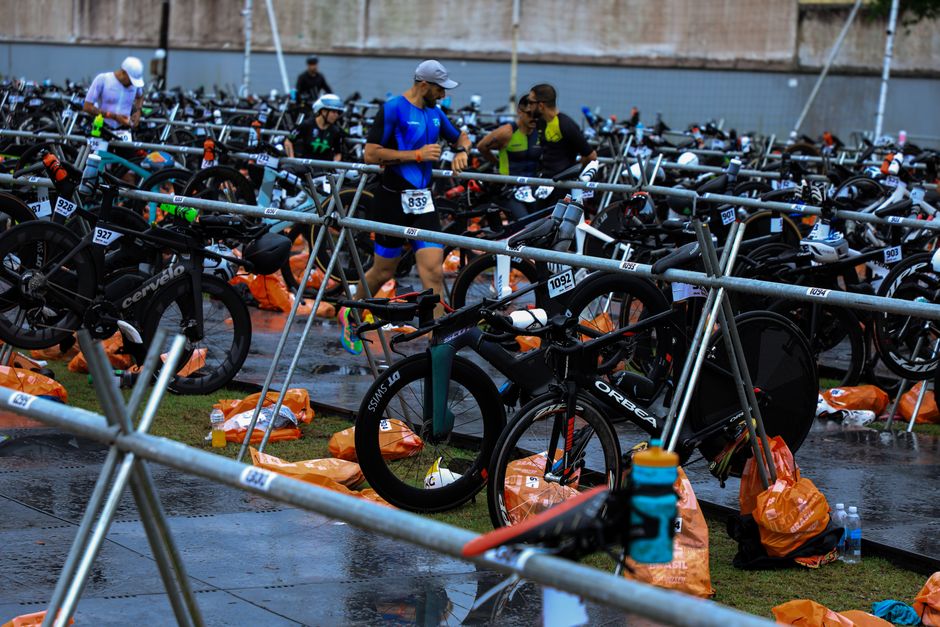
The night before a race, every triathlete does the same thing: lays it all out on the floor. Wetsuit, goggles, swim cap from the packet. Helmet, sunglasses, bike shoes. Running shoes with the laces already set, race belt with the number clipped on, a gel taped to the top tube. Triathlon has more gear than any single sport, and it’s easy to spend a fortune. But the triathlon gear that matters most is short: a wetsuit that fits for cold water, a tri suit you can wear all day, a helmet, a bike that fits, and a few transition tricks. Here’s that triathlon gear list, with what the rules allow and how to choose.

Buying guide · Our Triathlon buying guide compares the gear we'd pick, with prices and sizing:
Prices change often. The prices below are what we saw at the maker or a major retailer in October 2026; check the current price before you buy.
Our top picks
Synergy Endorphin Full Sleeve Wetsuit (Women's)
- 5 mm core, 3 mm legs, 2 mm arms
- Yamamoto #39 neoprene
- About $399
Synergy Endorphin Full Sleeve Wetsuit (Men's)
- Yamamoto #39 neoprene
- Internal YKK zipper
- About $399
Synergy SynSkin 3 Swimskin (Men's)
- Thin hydrophobic fabric
- YKK zipper, bonded seams
- About $100
Zoot Core Tri Tank Racesuit (Men's)
- Sleeveless, chamois pad
- Pockets, UPF 50+
- About $115
Giro Register MIPS Helmet
- MIPS rotational liner
- Universal adult fit (54-61 cm)
- About $40 to $85
Nathan Race Number Belt
- Toggle number holders
- Reflective details
- Fits 26-44 in waist
Lock Laces Elastic No-Tie Laces
- 48 in, stretch to 72 in
- One size, kids and adults
- About $10
Body Glide Original Anti-Chafe Balm
- 1.5 oz stick
- No petroleum, no oil
- About $11
Wetsuits
A triathlon wetsuit keeps you warm and helps you float higher, which is why most age-groupers wear one when it’s allowed. It’s not a surf wetsuit: tri wetsuits use thinner, more flexible neoprene in the arms and shoulders. What the rules say:
- Thickness: no more than 5 mm anywhere (USA Triathlon and IRONMAN), and it may not cover your face, hands or feet.
- Water temperature: in most USAT age-group races, wetsuits are allowed up to 78°F, optional without award eligibility from 78.1 to 83.9°F, and banned at 84°F and up. Below 60.7°F they’re mandatory. National championships and IRONMAN use lower award limits (76.2°F and 76.1°F). Our triathlon rules page has the full table.
- Extras: neoprene caps, boots and socks are allowed when wetsuits are; gloves only when wetsuits are mandatory, and nothing webbed.
How to choose: full-sleeve suits are warmer and many swimmers find them faster; sleeveless suits give free shoulders and suit warmer water. Fit matters more than brand: snug everywhere, no water pockets, and enough shoulder room to swing your arms. Use the maker’s height and weight chart, practice in it before race day, and peel it off a few times so you can do it fast in T1. Many races and shops rent wetsuits, a smart way to start.
The Synergy Endorphin full-sleeve wetsuit is a popular mid-price race suit. The women’s version uses Yamamoto #39 neoprene, 5 mm in the core panel, 3 mm in the lower legs and back and 2 mm in the arms and shoulders, with an internal YKK zipper (about $399). The men’s Endorphin is about $399 on Amazon; check the size chart before you buy. Rub Body Glide (about $11) around your neck, wrists and ankles: it stops chafing from the collar and helps the suit slide off.
Check the Synergy Endorphin wetsuit price on Amazon
Swimskins: when wetsuits are banned
In warm water you race in textile only. USAT’s rule: 100% textile (no neoprene or polyurethane), nothing covering the neck, and nothing past the elbows or knees. Neoprene “buoyancy shorts” aren’t allowed. A swimskin is a thin, tight suit worn over your tri suit to cut drag in non-wetsuit swims. The Synergy SynSkin 3 is a short-sleeve swimskin with a hydrophobic fabric, bonded seams and an auto-locking YKK zipper (about $100), made to fit tight over tri clothing. Check that any swimskin is approved for your race’s rules. For goggles, caps and swim training tools, see our swimming gear list; mirrored or tinted lenses help in outdoor glare.
Tri suits
A tri suit is the one outfit you wear for all three legs: it works under a wetsuit or alone, has a thin chamois pad for the saddle that doesn’t hold much water, and stays light on the run. One-piece suits don’t ride up; two-piece (top and shorts) is easier for bathroom stops. Look for a snug fit, a zipper you can vent on the run, leg grippers that stay put, and pockets for gels. Remember the textile rule if you’ll swim in it without a wetsuit, and zip the front up before the finish at national events.
The Zoot Core Tri Tank Racesuit (men’s) is a sleeveless one-piece with a chamois pad, pockets and UPF 50+ quick-dry fabric, for about $115. Zoot’s guide notes you wear the same outfit for swim, bike and run.
Check the Zoot Core Tri Tank price on Amazon
Bikes and aero basics
Any safe road bike, gravel bike or even a mountain bike will get you through a first sprint. USAT asks for a bike in good repair (glued tires, tight headset and bars, true wheels) with a freewheel; recumbents and fairings are banned. As you get serious:
- Clip-on aerobars turn a road bike into a time-trial-style setup for draft-illegal races. They’re not allowed in age-group draft-legal races (drop bars only) or in youth races.
- Triathlon or time-trial bikes are built around the aero position. They’re fast on flat courses but less handy for group rides and climbing, and they need a good fit.
- Bike fit first. The American Academy of Orthopaedic Surgeons recommends the right frame size and saddle and handlebar heights, and a professional fit for regular riders. A low aero position you can’t hold, or that hurts your neck and back, isn’t fast on race day.
- Bottles: up to 2 liters on the front of the bike and no more than two bottles (1 liter each) behind the saddle, under USAT rules.
More on bike types, pedals, lights and fit is on our cycling gear page.
Helmets
Every race requires a helmet approved by a recognized testing authority; in the US, that’s the CPSC label inside (required on every bike helmet made after 1999). No alterations, and the chin strap stays buckled whenever you’re with your bike. Aero helmets with long tails or visors are legal if they’re certified, but a well-vented road helmet is cooler on a hot day. Virginia Tech’s Helmet Lab rates bike helmets for how well they reduce linear and rotational head acceleration and recommends any helmet with four or five stars. The CPSC notes that no helmet has been proven to prevent concussions, so replace any helmet after a crash. The Giro Register MIPS (about $40 to $85) has a universal adult fit of 54–61 cm, a dial and a MIPS liner, which makers say helps reduce rotational forces in certain impacts.
Check the Giro Register MIPS price on Amazon
Transition: race belts and elastic laces
Seconds disappear in transition. Two cheap tricks fix most of it. A race belt holds your run number (which must be visible on the run) without pins, and you clip it on as you leave T2. The Nathan Race Number Belt uses light toggles, has reflective details and fits waists of 26–44 inches (about $20 list, often less). Elastic laces turn running shoes into slip-ons: Lock Laces (about $10) are 48 inches, stretch to 72, fit one pair of shoes, and the maker says they were first designed for triathletes. Add a small towel to stand on (USAT allows a towel or mat at your spot) and a bright bag to find your rack.
Check the Lock Laces price on Amazon
For the run itself, see running gear, and for a multisport watch, the best triathlon wearables. Long races need fuel: our energy gel and electrolyte powder guides compare options.
Recovery gear
After a long brick or a 70.3, legs are heavy and the shoulders ache. The Hyperice Normatec Go is a pair of wireless calf compression sleeves with seven pressure levels (40–200 mmHg), about $379. The Hypervolt Go 3 is a 1.6-pound massage gun with up to 4 hours of battery (about $149) for quads, calves and shoulders. A TriggerPoint GRID 1.0 foam roller (about $40) does a lot for little money, and OOFOS OOahh slides (about $60) are a favorite on race-day afternoons.
These are comfort tools, not treatment. Pain that doesn’t settle in a few days, numbness, or any pain after a crash needs a sports medicine doctor, physical therapist or athletic trainer. Check with your doctor before using compression devices if you have circulation problems or other health conditions. Our compression boots, massage guns and recovery shoes guides compare more, and the triathlon recovery page covers the routine.
Hyperice Normatec Go
- Calf compression sleeves
- 7 levels, 40-200 mmHg
- About $379
TriggerPoint GRID 1.0 Foam Roller
- 13 x 5 in
- Multi-density surface
- About $40
OOFOS OOahh Slide
- OOfoam slide
- APMA Seal of Acceptance
- Machine washable
Back to the triathlon hub, or see triathlon rules, race day and triathlon training. Also play a team sport? See our soccer gear list.
Triathlon gear questions
What gear do I need for my first triathlon?
Goggles, a swimsuit or tri suit, any safe bike, a CPSC-certified helmet and running shoes. A race belt and elastic laces make transitions easier, and a wetsuit helps in cold water, but none of them are required for a first sprint.
Can I use a surfing wetsuit for a triathlon?
Only if it’s no thicker than 5 mm anywhere, the USAT and IRONMAN limit. Even then, surf suits are usually stiffer in the shoulders, which makes swimming harder. A triathlon wetsuit, or a rental, is a better choice.
What’s the difference between a wetsuit and a swimskin?
A wetsuit is neoprene, for warmth and buoyancy, and is only allowed below the race’s temperature limit. A swimskin is thin textile with no buoyancy, worn over a tri suit to reduce drag when wetsuits are banned.
Do I need a triathlon bike?
No. A road bike that fits, perhaps with clip-on aerobars for draft-illegal races, is what many age-groupers race on. Get a professional bike fit before buying an aero setup.
Are aero helmets legal?
Yes, as long as they’re certified by a recognized testing authority (CPSC in the US) and not modified. Headphone-equipped “smart” helmets are banned in USAT races.